
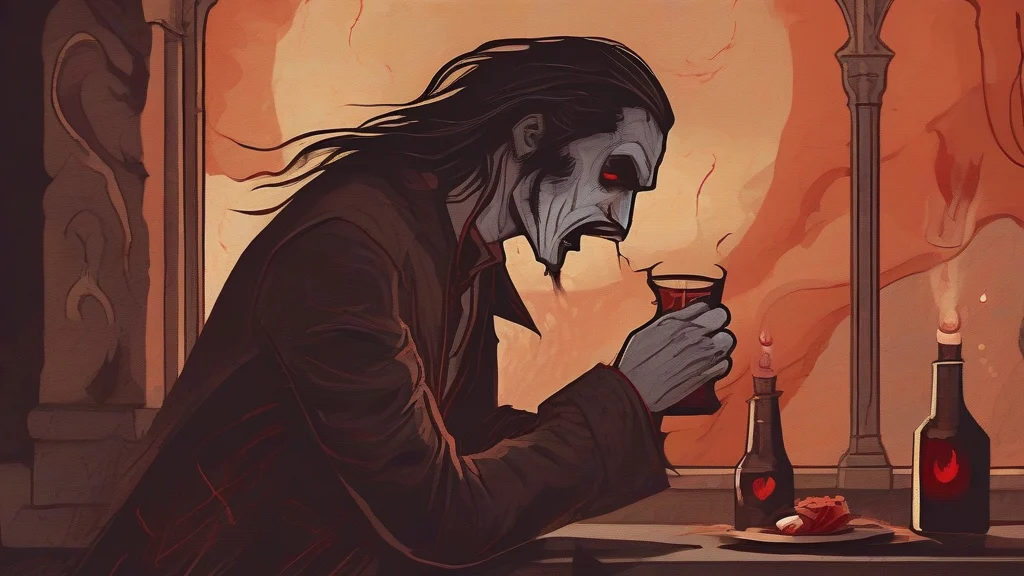
What does vampirism mean?
Vampirism denotes the beliefs, traditions, and practices associated with vampires: supernatural beings traditionally believed to drink blood and return to life after death. The word most often appears in discussions of folklore, literature, religion, and popular culture. It also has a figurative sense meaning predatory exploitation, especially of affection, labor, money, or other resources, with the implication that one party is being drained for another's benefit. This figurative use may describe relationships, businesses, political systems, or cultural practices. Vampirism is usually treated as an uncountable noun, so it normally takes a singular article and appears without a plural. Its figurative uses are often critical and may imply a moral judgment, whereas references to folklore and fiction can be analytical or descriptive. The word is useful because it links a familiar supernatural tradition to broad concerns about consumption, dependence, power, and exploitation.
nounThe practices, beliefs, or traditions associated with vampires. By extension, it can refer metaphorically to predatory exploitation of people or resources.
- The practices, beliefs, and traditions associated with vampires.
- Predatory exploitation of people, affection, wealth, or other resources, often likened to a vampire's consumption of blood.
"Folklore scholars have long debated the historical roots of vampirism across Eastern and Western Europe."
"The novel explores vampirism through the experiences of an isolated community in the Carpathian Mountains."
"Critics accused the corporation's financial practices of a form of vampirism that drained small businesses of their profits."
Vampirism began as folklore, but the metaphor now describes everything from predatory romance to the draining of a community's resources.
Reviewed by Deb Chak, Editor. AI-assisted content curated by RJS Tech Solutions LLP.
Etymology of vampirism
Vampirism was formed in English by adding the suffix “-ism” to “vampire,” producing a noun for a practice or system of belief rather than an individual supernatural being. English borrowed “vampire” from French, though the deeper ancestry of the word is uncertain and has been the subject of scholarly investigation. The derived noun entered English usage during the period when European vampire legends were widely discussed in literature, folklore, and reports.
How vampirism is actually used
The word is usually uncountable and can carry sensational or moralizing overtones when used figuratively. It is common in literary, cultural, and social criticism, while the phrase “sexual vampirism” is also used in specialized discussion of relationships understood as draining or manipulative.
Easily confused with vampirism
A vampire is the supernatural being traditionally depicted as drinking blood, whereas vampirism is the practice, belief system, or broader phenomenon associated with such beings.