
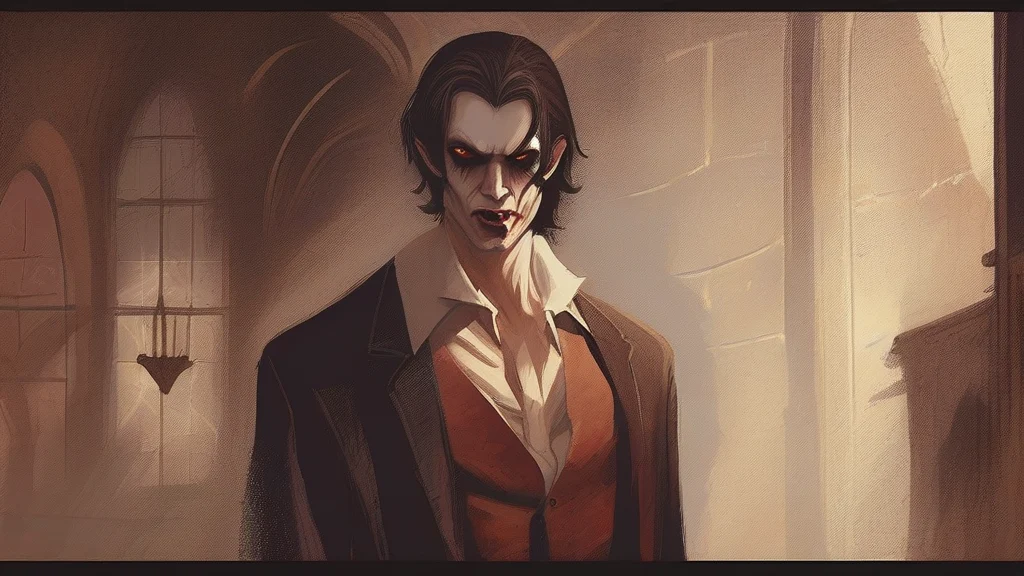
What does vampire mean?
A vampire is a being from folklore and fiction who is believed or portrayed as having died and then returning to life, usually to drink blood. In contemporary usage, the term can also describe a predatory person who drains others of money, energy, affection, or attention. These figurative uses often carry a strongly critical or humorous tone. The word also appears in biological names for blood-feeding or vampire-like organisms, most notably vampire bats. In entertainment, vampire stories frequently combine supernatural horror with themes of immortality, isolation, power, and moral conflict. The result is a word that operates both as a familiar cultural image and as a versatile metaphor for exploitation. Its history reflects the movement of folklore through several European languages, making the familiar modern creature a surprisingly international idea.
A mythical or fictional undead being traditionally believed to rise from the dead and drink blood; figuratively, a person who preys on or drains others.
"The village believed that a vampire had been lurking in the abandoned church."
The figurative sense is common in informal and literary language.
Of or relating to vampires, or resembling a vampire in appearance or behavior.
"The exhibition explores vampire mythology in nineteenth-century literature."
Chiefly an attributive or compound-forming use.
To drain or exploit someone financially, physically, or emotionally.
"Scammers may vampire their victims' savings through fake investment schemes."
Informal and less common than the noun; often deliberately figurative.
The standard plural adds -s; in compound names, vampire usually functions as a modifier rather than a plural form.
"The stories feature vampires who are isolated from human society."
The word entered English through French and ultimately traveled from a Slavic name for a blood-drinking corpse.
Reviewed by Deb Chak, Editor. AI-assisted content curated by RJS Tech Solutions LLP.
Where does vampire come from?
The English word appeared by the early 18th century, borrowed from French vampire. French had taken the word from Hungarian vampir, which in turn reflects Serbian and the wider Slavic vocabulary for blood-drinking undead beings. Related forms include Polish wampir, Czech upír, and Slovak vampír. The English word therefore belongs to a European folklore tradition that circulated across languages before becoming a central figure in modern horror.
Related word forms
How vampire is actually used
The noun is neutral in register and is used both literally and figuratively. As an adjective, the word is usually attributive and commonly occurs in compound expressions. The verb is informal, comparatively uncommon, and normally means to drain or exploit someone financially, physically, or emotionally.