
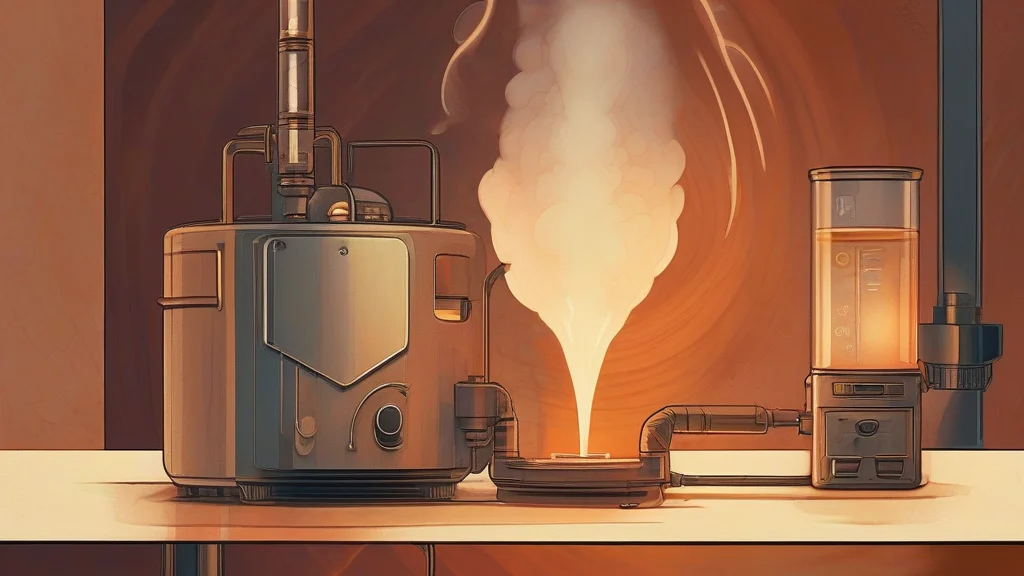
What does vaporization mean?
Vaporization is the process of converting a liquid into a gas or vapor, usually through heating, reduced pressure, or a combination of both. The term appears in science and engineering when describing how fuels, solvents, refrigerants, and other liquids become gases, and it can also refer to the deliberate dispersal of a substance as a vapor. Vaporization is broader than evaporation: evaporation usually describes a gradual change at a liquid’s surface, while vaporization can be rapid, controlled, or the result of intense heating. The word is especially common in discussions of engines, chemical processing, aerosols, and fuel systems. In American English it is spelled with “-ization,” while British English often uses “-isation.” Understanding the distinction is useful because it clarifies both the physical process involved and the practical conditions under which a liquid changes state.
nounThe process of converting a liquid into a gas or vapor, especially by heating or pressure. It can also refer more broadly to the act of dispersing a substance in the form of a vapor.
- The process of converting a liquid into a gas or vapor.
- The act or process of dispersing a substance in the form of a vapor.
"The rapid vaporization of the liquid cooled the metal surface."
"The vaporization of water in the engine produces the steam that drives the pistons."
"The use of a fine mist can reduce the vaporization of the solvent during application."
The plural is used when referring to separate instances of the process.
"The report described the vaporizations that occurred during the experiment."
From the Latin vapor, meaning steam or mist, vaporization names the moment a liquid loses its liquid identity and becomes a cloud.
Reviewed by Deb Chak, Editor. AI-assisted content curated by RJS Tech Solutions LLP.
Where does vaporization come from?
The word derives from Latin vapor, meaning “steam” or “mist,” combined with the suffix “-ization,” which forms a noun denoting a process or action. The related English word “evaporate” also comes from Latin, while “vaporous” was formed from the same Latin root. The English spelling reflects the usual difference between American and British conventions: “vaporization” in American English and “vaporisation” in British English.
Related word forms
How vaporization is actually used
The word is formal or technical in many contexts, especially in science, engineering, and safety discussions. American English normally uses “vaporization”; British English commonly uses “vaporisation,” with the related forms “vaporize” and “vaporise” showing the same spelling distinction.
Easily confused with vaporization
Evaporation is the gradual change of a liquid into vapor, usually at its surface and often below the boiling point, whereas vaporization is the broader process of converting a liquid into vapor and may be deliberate or rapid.