
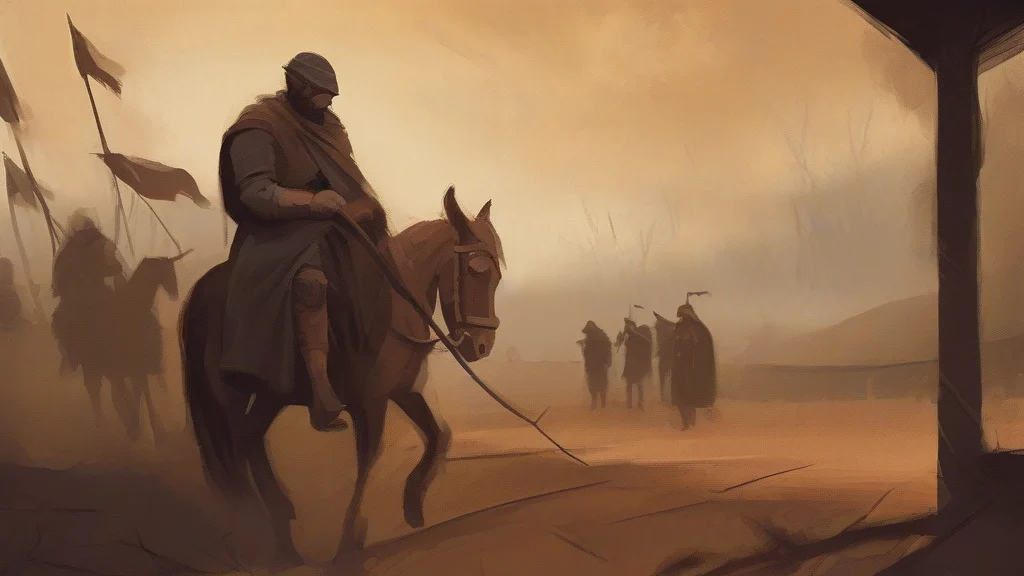
What does vassalage mean?
Vassalage denotes the condition of being a feudal subordinate to an overlord rather than the subordinate person themselves. In its historical sense, it can also refer to the lands or tenure held under such an arrangement. The word is uncommon in modern English but remains useful in historical, legal, and literary writing, where it evokes obligations of homage, service, or obedience. Unlike servitude, which may imply enslavement or total subjugation, vassalage specifically points to a structured feudal relationship between a lord and an inferior. A vassal was bound to a lord, while the vassalage was the condition or status of that bond. The term also lends itself to discussion of political dependence, although using it for a modern arrangement may sound archaic or deliberately elevated. Its combination of legal precision and historical color makes it especially valuable to readers encountering medieval institutions or the language of feudal obligation.
nounThe condition or status of being a feudal subordinate to an overlord; historically, the lands or tenure held by a vassal.
- The condition or status of being a vassal or feudal subordinate.
- Land, territory, or tenure held by a vassal from an overlord.
"The province remained in vassalage to the crown for nearly two centuries."
"The province remained in vassalage to the crown for nearly two centuries."
"The court recognized the disputed estate as land held in vassalage from the Crown."
The plural is grammatically possible but rare; in modern usage, vassalage is normally treated as a mass noun.
"These vassalages carried distinct obligations of homage and service."
Vassalage names not the person beneath the lord, but the condition of being bound to one.
Reviewed by Deb Chak, Editor. AI-assisted content curated by RJS Tech Solutions LLP.
Where does vassalage come from?
English vassalage came through Old French vassalage, a feudal-law term developed from Medieval Latin vassalagium. The underlying Latin element vassalis denotes a vassal or feudal tenant and also underlies related English words such as vassal and vassalic. The term developed within medieval systems of landholding, service, and allegiance.
How vassalage is actually used
This is a rare, formal, and distinctly historical word, chiefly used in legal, medieval, or elevated literary contexts. It is more precise than a general term such as dependence because it refers specifically to a feudal relationship.
Easily confused with vassalage
A vassal is the subordinate person who holds land from an overlord, whereas vassalage is the condition or relationship of that subordination.