
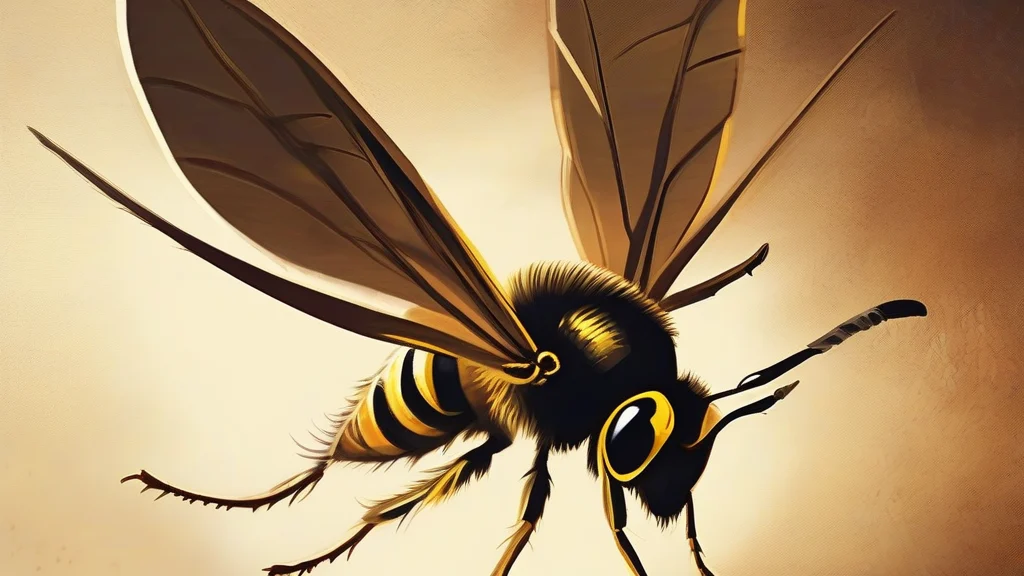
What does vespine mean?
Vespine is an adjective meaning “of or relating to wasps,” or “resembling a wasp.” It is used chiefly in formal and scientific writing, particularly in entomology, where it can identify characteristics associated with wasps or describe an organism’s resemblance to one. For example, a naturalist might call an insect's narrow waist and contrasting markings “vespine features,” while a writer might describe a vehicle’s streamlined body as having a vespine appearance. The word is relatively uncommon outside specialist contexts and is more precise than the general expression “wasp-like,” though it is also less accessible. It derives from the Latin vespa, meaning “wasp,” through the Latin taxonomic group Vespinae, the subfamily that includes social wasps. Knowing vespine provides a useful formal label for both genuine wasp characteristics and convincing visual imitations of wasps.
adjectiveOf, relating to, or resembling a wasp; wasp-like.
- Of, relating to, or characteristic of wasps.
- Resembling a wasp in form, colour, or appearance.
"The wasp's sharply narrowed waist and distinctive markings made the insect unmistakably vespine."
"Researchers documented several vespine species in the garden."
"The beetle's black-and-yellow pattern gave it a vespine appearance."
“Vespine” combines the Latin word for a wasp with a suffix meaning “pertaining to,” giving it an unusually precise entomological label.
Reviewed by Deb Chak, Editor. AI-assisted content curated by RJS Tech Solutions LLP.
Etymology of vespine
Vespine ultimately derives from Latin vespa, meaning “wasp,” the same source of the taxonomic name Vespinae for the wasp subfamily. The English adjective was formed with the suffix -ine, meaning “pertaining to” or “resembling.” Its development reflects the longstanding scientific tendency to name groups and their characteristic qualities after the same Latin root.
How vespine is actually used
This is primarily a formal or specialist adjective, especially used in entomology. It is less common than the general terms “wasp-like” and “hymenopteran.”