
What does victrola mean?
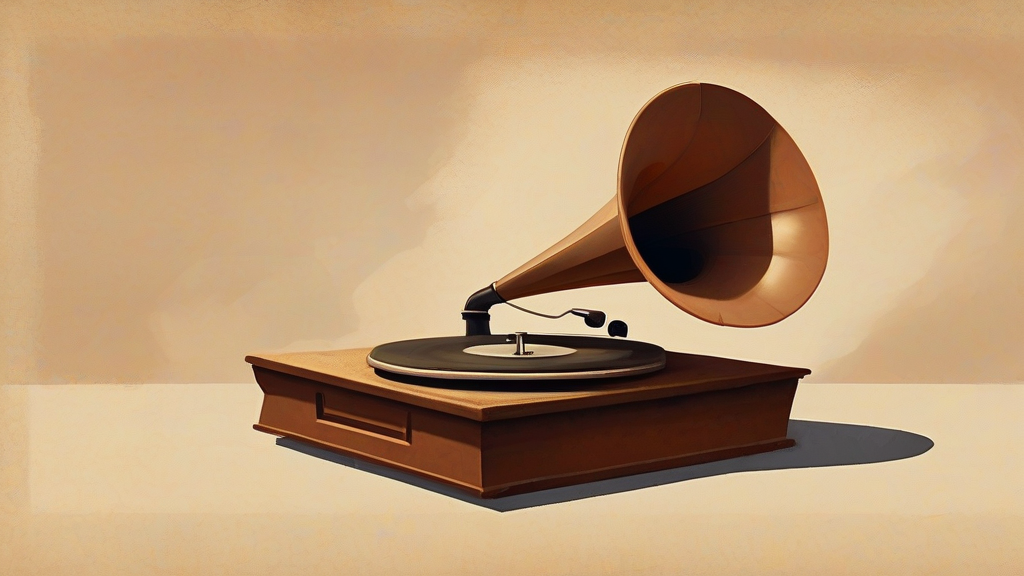
A victrola is a type of gramophone or phonograph distinguished by a built-in acoustic horn, which directs and amplifies the sound of a record. Historically, the name became generic for talking machines associated with a prominent American manufacturer and was especially familiar in the first half of the twentieth century. In current English, “victrola” is usually a historical or nostalgic word: it evokes a wind-up machine in a parlor, a hand-cranked needle, and the sound of shellac records rather than modern audio equipment. The word can also be used more broadly for an old-fashioned record player, although not every phonograph has the horn that made early Victrolas distinctive. For that reason, calling a modern turntable a victrola is evocative but imprecise. The term is most useful when discussing early recorded music, domestic listening culture, and the era when the phonograph became a household centerpiece.
nounA type of gramophone or phonograph with a built-in acoustic horn, especially one of the early twentieth-century talking machines for which the name became generic. The term is now mainly historical or nostalgic.
- A horn-equipped gramophone or record player, especially a historical talking machine using a hand crank or an early electric mechanism.
"The old victrola in the corner gave the room its character."
"He put on a record and turned the crank on the old victrola."
"The museum displays a 1920s victrola beside its original shellac discs."
The standard plural adds -s: one victrola, two or more victrolas.
"Several antique victrolas were displayed at the exhibition."
A hand-cranked horn that helped make recorded music a living-room centerpiece—before radio became the default.
Reviewed by Deb Chak, Editor. AI-assisted content curated by RJS Tech Solutions LLP.
Etymology of victrola
Victrola was coined in the United States in the early twentieth century as a trademark for a talking-machine product. Its form combines a shortened form of the manufacturer's name with the ending “-ola.” Because it is a coined commercial name rather than an inherited European word, it has no conventional etymological cognates.
How victrola is actually used
The lowercase form is usual in generic, historical, or nostalgic references; capitalization may preserve historical product styling. In loose modern speech, the word can label any phonograph or even a turntable, but this is imprecise because a traditional victrola has a prominent horn.