
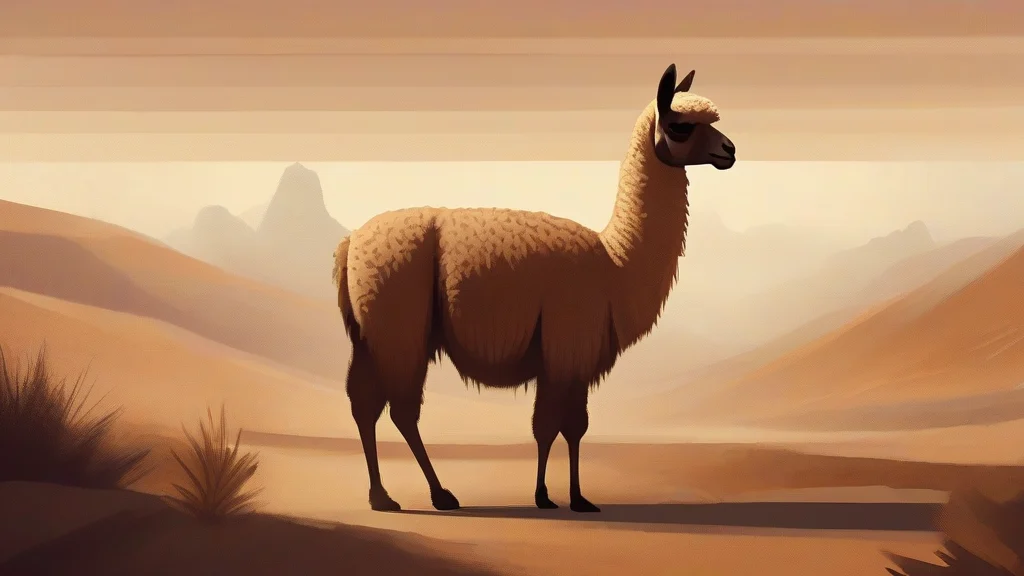
What does vicugna mean?
A vicuña is a small wild camelid native to the central Andes of South America. It is the smallest living member of the camel family and is closely related to the llama, alpaca, and guanaco. Its fleece is exceptionally fine, warm, light, and lustrous, making vicuña wool one of the most valuable natural fibres used in luxury clothing. Vicuñas live at high elevations in cold, dry environments, particularly in Peru, Bolivia, Chile, and Argentina. Because unrestricted hunting sharply reduced their numbers, they were later protected by international conservation measures. Carefully regulated harvesting and controlled commercial programs now allow communities to benefit from the animals while helping preserve their populations. In English, the word occurs both in descriptions of the animal and in textile and fashion contexts, especially in references to vicuña wool, fibre, and clothing. The spelling vicuña is also common and preserves the original Spanish orthography.
nounA small, slender wild camelid native to the Andes, valued for its exceptionally fine, soft, and lustrous wool. The vicuña is the smallest member of the camelid family.
- A small wild camelid of the central Andes whose exceptionally fine fleece is used to make luxury textiles.
"The protected vicuña herds graze high in the Peruvian Andes, where the cold, dry climate helps preserve the quality of their fleece."
"Conservation programs allow local communities to monitor and sustainably harvest vicuña wool."
"Her coat was lined with genuine vicuña, making the garment both exceptionally warm and extremely costly."
The form vicuñas is common in general English, while vicugnas also follows the spelling of the singular headword.
"Several vicuñas were observed grazing on the high-altitude slopes."
A vicuña can live at elevations above 3,500 metres, producing some of the world's finest wool in temperatures that would overwhelm most other animals.
Reviewed by Deb Chak, Editor. AI-assisted content curated by RJS Tech Solutions LLP.
Etymology of vicugna
The English word vicugna was borrowed from Spanish vicuña, which in turn comes from the Quechua name wik'uña. Spanish also developed vicunero for a person or business concerned with vicuña or its products, reflecting the animal's long economic importance in Andean regions. The English form vicugna reflects a simplified spelling that omits the diacritic.
How vicugna is actually used
The term is used in zoology, conservation, textile, and fashion contexts. Both vicugna and vicuña are established spellings in English, with vicuña reflecting the original Spanish spelling.
Easily confused with vicugna
Vicuña is the standard Spanish-influenced spelling of the same animal and is not a separate species.
A guanaco is a larger, more robust wild camelid, whereas a vicuña is smaller and finer-fleeced.