
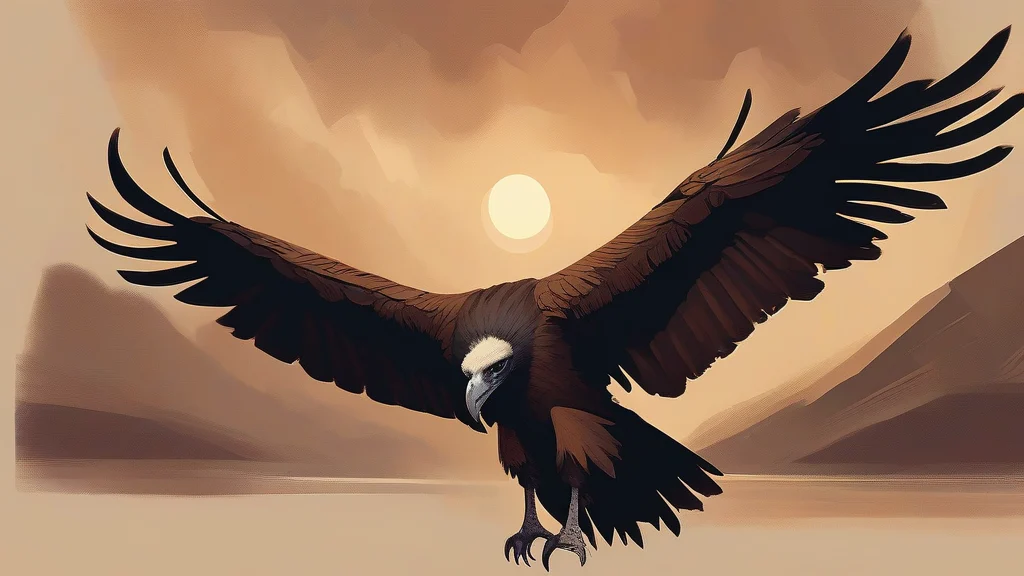
What does vulturous mean?
Vulturous is a rare, literary adjective for something that resembles or behaves like a vulture. In its literal sense, it describes qualities associated with these scavenging birds, especially feeding on carrion. In figurative use, vulturous marks people, organizations, or conduct as opportunistic, predatory, or willing to profit from another’s misfortune; it is markedly more evaluative than simply predatory. The word is especially useful when an author wants to evoke the circling, waiting image of vultures as well as the moral judgment that this image carries. Although recognized in British and American English, it appears far less often in everyday speech than vulture-like, scavenging, or rapacious. Its rarity and vivid negative connotation suit formal prose, literary criticism, and pointed description, though it may sound exaggerated in casual conversation. Etymologically, it belongs to the English vocabulary family built on vulture and ultimately the Latin word vultur.
adjectiveHaving the qualities or appearance of a vulture; especially feeding on carrion or behaving with the greed and opportunism associated with vultures.
- Having the qualities of a vulture, especially feeding on carrion.
- Figuratively, behaving greedily or opportunistically, like a vulture waiting to exploit the remains of something or someone.
"The predatory corporation displayed vulturous instincts, circling the struggling company before its collapse."
"His vulturous attention fixed immediately on the company's weakened finances."
"The essay describes the publisher's vulturous treatment of struggling authors."
Vulturous transforms a familiar image into a moral verdict: the scavenger is not merely hungry, but ready to profit from another creature's misfortune.
Reviewed by Deb Chak, Editor. AI-assisted content curated by RJS Tech Solutions LLP.
Etymology of vulturous
The adjective was formed in English from vulture with the suffix -ous, meaning characteristic of or resembling the thing named. The English noun vulture entered Middle English through Old French vautour, which derives from Latin vultur, meaning vulture. Vulturine and vulturing are related developments within the same English word family.
Related word forms
How vulturous is actually used
Rare and literary in contemporary English. Its figurative use is strongly evaluative and usually conveys predation, opportunism, and exploitation rather than merely ordinary acquisitiveness.
Easily confused with vulturous
Vulturine is the more established word for vulture-like and can also be a noun for a turkey vulture, whereas vulturous is a rarer adjective meaning characteristic of a vulture.