
What does waffle mean?
“Waffle” has two lively lives. As a noun, it most often denotes a thin cake made from batter cooked in a hinged iron that leaves a characteristic grid of pockets. As a verb, “to waffle” means to talk at length without making much progress toward a useful conclusion and, in informal usage, to hesitate or avoid making a decision. The word is therefore both concrete and figurative: a waffle can be breakfast, while a person who waffles leaves listeners with impressions rather than clear answers. The expression “waffle on” captures the extended, meandering quality of its verbal sense. Although the food is now familiar, the word has an older history, entering English through Dutch and sharing a Germanic family with German Waffel. Its usefulness lies in how directly it names both a recognizable object and a recognizable kind of evasive or meandering speech.
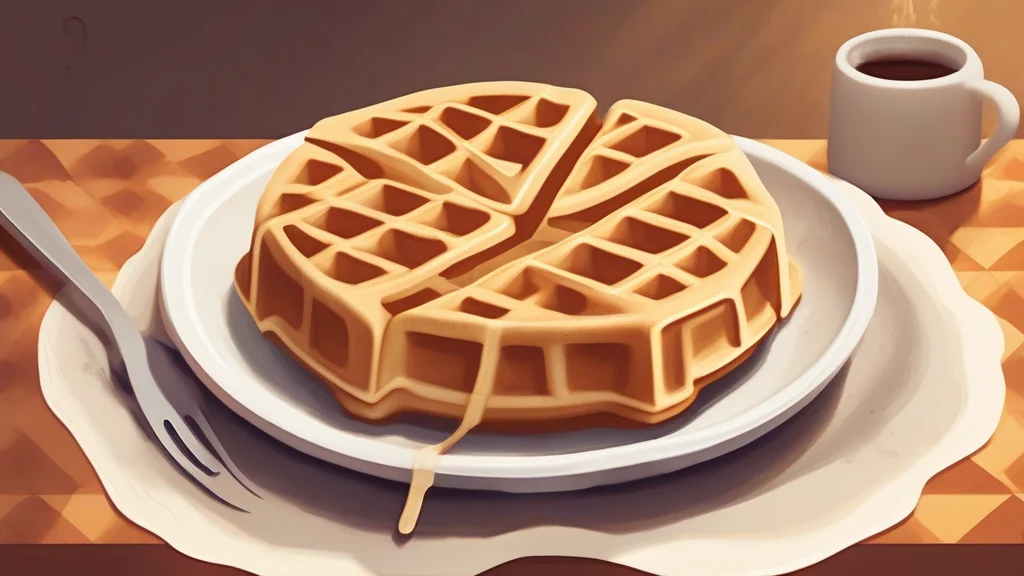
A thin cake made from batter cooked in a hinged iron that produces a grid of pockets; by extension, a long discussion that lacks useful content.
"The café serves both traditional waffles and a savoury spinach version."
The food sense is standard in British and American English. The figurative sense for prolonged, insubstantial talk is less common but established.
To speak or write at length without reaching a useful conclusion; also, to hesitate or avoid making a decision.
"Stop waffling and tell us which option you prefer."
Usually informal and often mildly negative or dismissive.
The regular plural refers to individual waffles, multiple servings, or separate figurative discussions.
"The children ordered waffles with fresh fruit."
From a breakfast grid to 'stop waffling,' this word has mastered two different kinds of texture.
Reviewed by Deb Chak, Editor. AI-assisted content curated by RJS Tech Solutions LLP.
Etymology of waffle
The English word was borrowed from Dutch wafel in the early 17th century. Dutch wafel and German Waffel are cognates whose older Germanic ancestry is associated with a honeycomb or similarly patterned surface. The culinary meaning was subsequently extended to the hinged utensil used to cook the batter in its characteristic grid.
Related word forms
How waffle is actually used
The verb is informal and often mildly critical or dismissive. The sense of indecision is especially associated with British usage, although it is also understood in North American English.
Easily confused with waffle
A waffle is made from batter in a gridded iron, whereas a wafer is a thin, crisp, usually flat sheet or small piece made without the raised pockets of a waffle.