
What does wagtail mean?
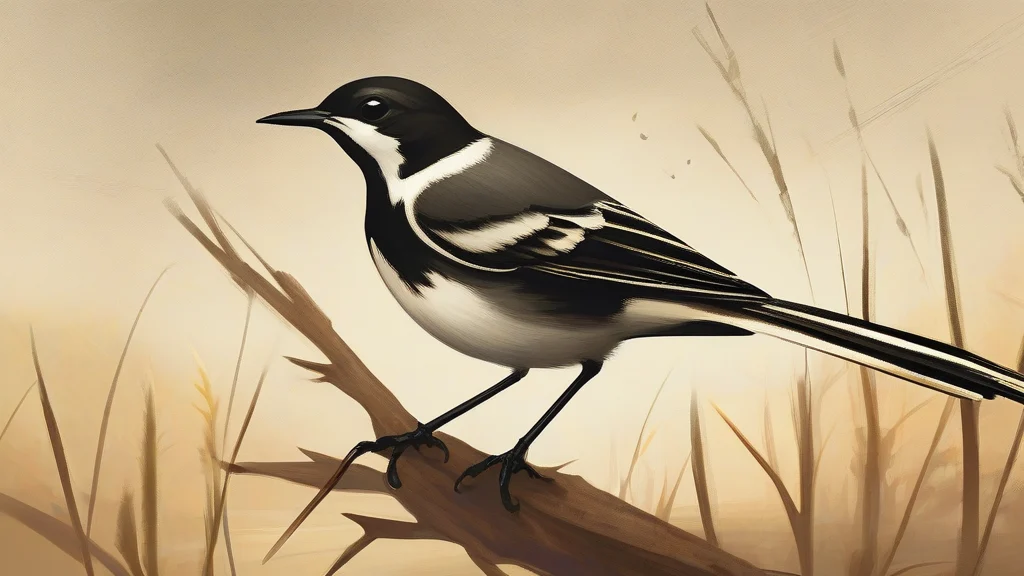
Wagtail is the common name for small, slender songbirds of the genus Motacilla, a group best known for long tails that are frequently flicked, pumped, or wagged. The best-known member is the white wagtail, which occurs widely across Europe, Asia, and Africa and has numerous regional forms. Other familiar species include the grey wagtail and yellow wagtail. Wagtails are agile insect-eaters, often appearing near rivers, streams, wetlands, open ground, and human settlements. The word is also readily recognizable from its transparent construction: it combines “wag” with “tail.” Although “wagtail” is primarily an ornithological term, it occasionally appears in literary or figurative writing because the bird's conspicuous tail movements create a memorable image. For general readers, the name provides an especially useful example of how ordinary English words can describe an animal's most characteristic behavior with economical precision.
nounAny of various small, slender songbirds of the genus Motacilla, typically with long tails that are frequently wagged. The term is especially associated with the white wagtail and its various regional forms.
- A small, slender, long-tailed songbird of the genus Motacilla, often seen darting near water or actively flicking or wagging its tail.
"A grey wagtail flicked its long tail while probing the shallow water for insects."
"The white wagtail searched the grass for insects before flying to a nearby wall."
"A wagtail's nervous tail movements have long made it an engaging bird for patient observers."
The standard plural form, used when referring to one or more birds of this kind.
"Several wagtails gathered beside the stream."
A wagtail literally wears its name: it repeatedly wags the long tail that gives the bird its distinctive silhouette.
Reviewed by Deb Chak, Editor. AI-assisted content curated by RJS Tech Solutions LLP.
Where does wagtail come from?
The English word dates from the late 16th century and was formed from “wag,” meaning to move to and fro, and “tail.” The compound refers to the bird's characteristic habit of continually wagging or flicking its long tail. The “wag” element also underlies related English words such as “waggle,” “wagger,” and “waggish.”
How wagtail is actually used
The term is standard in ornithological and general English. Outside birdwatching and natural-history writing, it is relatively uncommon and can sound poetic or evocative when used figuratively.