
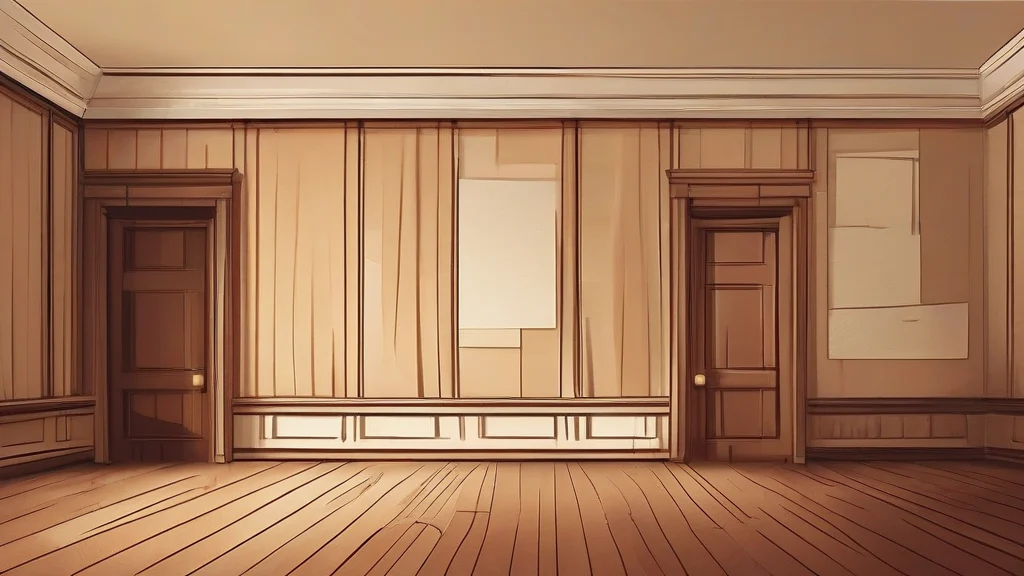
What does wainscotting mean?
Wainscotting is the wooden paneling used to line the lower portion of interior walls. It traditionally forms a durable band below a chair rail, protecting plaster from scuffs while giving a room a formal, finished appearance. In modern homes, wainscotting may be painted, stained, or veneered and can range from simple vertical boards to raised panels. The term is primarily architectural and is normally treated as a collective or mass noun: writers say “the wainscotting in the hallway” rather than counting individual pieces. It should not be confused with “wainscot,” which may refer to a single panel or to the lined lower wall itself, nor with “dado,” a broader term for a lower wall section or decorative treatment. Wainscotting is especially useful when describing period interiors, where matching panels, rails, and trim help define the character of a room. Although the word sounds elaborate, it names an old and practical building treatment rather than a rare decorative luxury.
nounWooden paneling that lines the lower portion of an interior wall. The word can also refer collectively to such paneling or to the material used for it.
- Wooden paneling lining the lower part of an interior wall, especially as a collective decorative or protective treatment.
"They restored the original wainscotting along the stairwell and dining-room walls."
"They restored the original wainscotting along the stairwell and dining-room walls."
"The carpenter installed dark wood wainscotting in the home office."
"Modern wainscotting can provide visual interest without covering the entire wall."
Rare and uncommon; wainscotting is normally treated as an uncountable collective noun.
"The carpenter built matching wainscottings for the hallway and dining room."
Wainscotting is where a wall stops being merely a wall and starts behaving like furniture.
Reviewed by Deb Chak, Editor. AI-assisted content curated by RJS Tech Solutions LLP.
Etymology of wainscotting
Wainscotting entered English in the 17th century through the addition of the noun-forming suffix -ing to the earlier noun wainscot. Wainscot itself was borrowed into Middle English from Middle Dutch and has related forms in continental Germanic. Traditional etymologies connect it with words meaning “wagon” and “protection,” but that proposed analysis is not certain.
Related word forms
How wainscotting is actually used
Wainscotting is chiefly an architectural and interior-design term and is normally treated as an uncountable collective noun. British English generally spells the broader equivalent “panelling,” while American English uses “paneling.”
Easily confused with wainscotting
Wainscot can refer to an individual panel or to the lower portion of a lined wall, whereas wainscotting usually denotes the finished woodwork collectively.
A dado is a lower wall section, molding, or decorative band that need not be paneled, while wainscotting specifically consists of wooden wall paneling.