
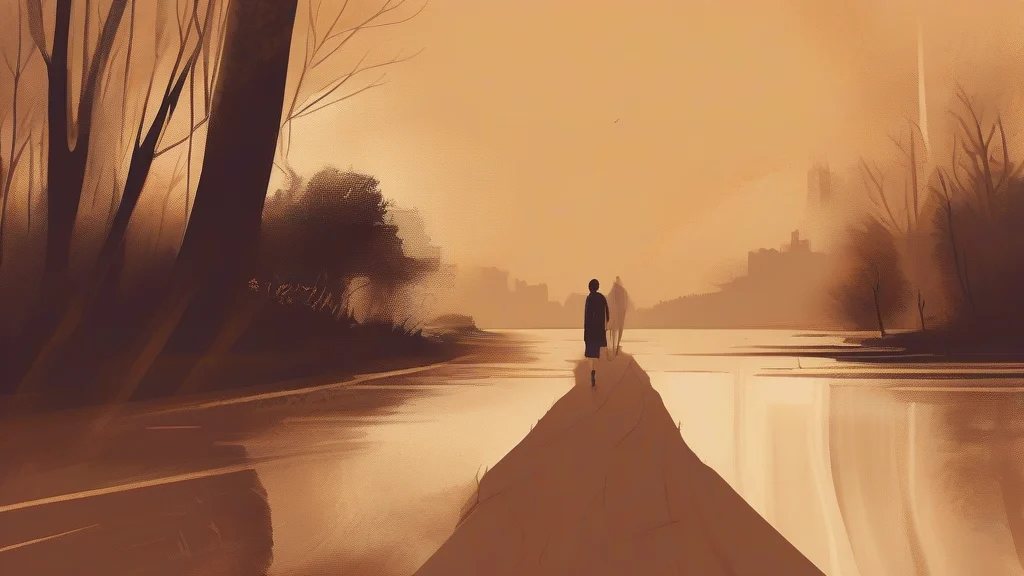
What does wandling mean?
Wandling is an old English noun and adjective associated with wandering. As a noun, it can identify a person who travels or roams from place to place, and older usage also allowed it to mean the act or condition of wandering. As an adjective, it describes someone or something that is vagrant, itinerant, or given to roaming. The word is chiefly encountered in archaic, literary, or historical contexts and sounds markedly more old-fashioned than the modern forms wander, wanderer, and wandering. Its particular force comes from its compact form and its suggestion of a person who has no settled home or stable destination. Although it is no longer commonly used in neutral everyday speech, it remains useful in period dialogue, historical narration, and prose that calls for an elevated or nostalgic register. The form also illustrates the English family built on the ancient root represented by wander, linking movement, travel, and the condition of being unsettled.
A wanderer, rover, or vagrant person; in older usage, the act or condition of wandering.
"Each wandering brought the young wandling closer to the northern coast."
The personal noun is uncommon and normally carries a literary or archaic flavor.
Wandering, vagrant, or given to roaming.
"They described the solitary, wandling figure as an outsider among the townspeople."
Chiefly literary or archaic; modern English normally uses wandering, vagrant, or itinerant instead.
The regular plural is rarely needed because the noun itself is uncommon and generally appears in archaic or literary writing.
"The story gathers a group of wandlings from different provinces."
Wandling is a vivid survival of the old English wander family, preserving a time when a roving person could be named with a single, unusually evocative word.
Reviewed by Deb Chak, Editor. AI-assisted content curated by RJS Tech Solutions LLP.
Etymology of wandling
Wandling descends from Middle English forms in the wandel- family and ultimately from the Germanic root represented by modern English wander. Older usage employed the word both for a wanderer and for the condition or act of wandering, while the adjectival sense expressed the quality of being vagrant or roving. It has no productive modern family of its own beyond the plural wandlings and survives chiefly in archaic, literary, and historical contexts.
How wandling is actually used
Wandling is archaic and literary rather than part of ordinary modern vocabulary. The noun is uncommon, while the adjective sounds especially poetic or deliberately antiquated.
Easily confused with wandling
Wandering is the modern noun and participle associated with wander, whereas wandling is an older noun and adjective with a more explicitly archaic tone.
Wandling refers to wandering or a wanderer, while wadding means soft material used for padding or cushioning.