
What does waspiness mean?
Waspiness names an irritable, sharply critical, or petty quality of behaviour, particularly one expressed through biting remarks or an easily provoked manner. The word is uncommon but vivid: it suggests a person whose displeasure resembles the abrupt, painful sting of a wasp. A speaker or writer may be described as showing waspiness, while the noun itself is often used with qualifiers such as a note, touch, or hint of waspiness to indicate that the unfriendliness is restrained rather than severe. In most situations, the more familiar words irritability or petulance are preferable, but waspiness can add a literary edge and a suggestion of pettiness. It is chiefly an abstract noun and is normally treated as uncountable, although a plural form is occasionally possible. The word is a nominalization of waspish and is metaphorically related to the insect from which waspish derives.
nounThe state or quality of being waspish, especially an irritable, sharply critical, or petty manner.
- The quality of being irritable, sharply critical, or easily annoyed, especially in a petty or biting manner.
"A note of waspiness entered her reply when she read the suggestion that her research was incomplete."
"His waspiness turned an innocent question about the schedule into an argument."
"The review was praised for its precision, though a little waspiness in its treatment of the author was widely noted."
Rare; waspiness is ordinarily treated as an uncountable abstract noun.
"The critics catalogued the various waspinesses of the novelist's public remarks."
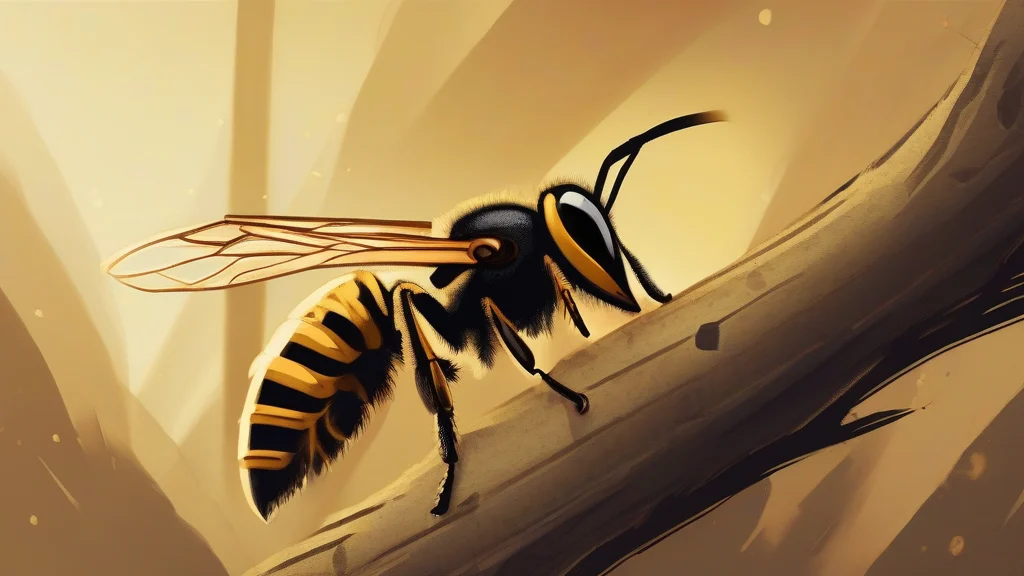
Waspiness turns the image of a wasp's sting into a metaphor for a sharply worded temper.
Reviewed by Deb Chak, Editor. AI-assisted content curated by RJS Tech Solutions LLP.
Where does waspiness come from?
Waspiness was formed in English by adding the suffix -ness to waspish, which in turn combines the English noun wasp with -ish. The underlying noun goes back to Old English wæps and has close relatives in other Germanic languages, including German Wespe and Dutch wespe. The development from the literal sense of a wasp-like creature to the figurative sense of sharp, irritable speech is a longstanding metaphor, while the later formation of waspiness made that figurative quality into an abstract noun.
How waspiness is actually used
Waspiness is uncommon and somewhat literary in tone. In neutral contexts, irritability, petulance, or sharpness will usually sound more natural.