
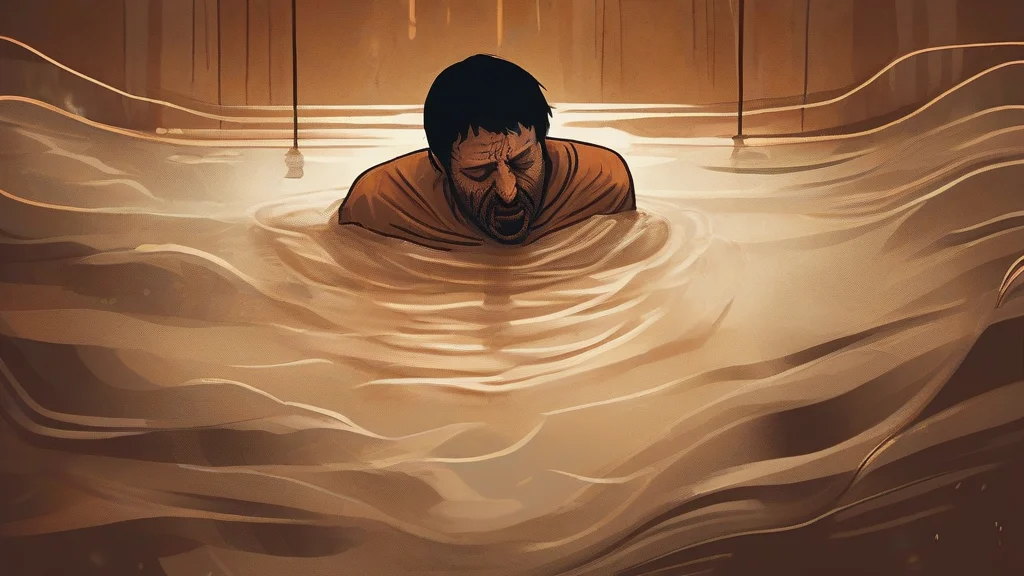
What does waterboarding mean?
Waterboarding is a method of torture and coercive interrogation in which water is poured or forced over a restrained person’s face or head, making it difficult or impossible to breathe and simulating drowning. The term is used in legal, journalistic, historical, and human-rights contexts, particularly in connection with the interrogation of detainees and prisoners. It is strongly negative and carries associations with brutality, abuse of power, and unlawful coercion. Although the technique varies in detail and is often described as a form of water torture, its defining feature is the use of water to produce the sensation or fear of suffocation rather than simply placing the whole body underwater. The word is commonly discussed in reports, testimony, legal proceedings, and debates over the ethics and legality of interrogation methods.
The act or practice of torturing someone by pouring or forcing water over the face or head, usually while the person is restrained, to simulate drowning.
"The government denied that waterboarding had been used at the detention facility."
Often used in legal, historical, journalistic, and human-rights contexts; the plural form is uncommon.
To torture or interrogate someone by pouring or forcing water over the face or head so as to simulate drowning.
"The officers were accused of waterboarding the prisoner to obtain a confession."
The form waterboarding is normally used as a gerund or present participle; the simpler forms are waterboard, waterboards, and waterboarded.
Usually uncountable when referring to the practice or method; the plural is uncommon and may refer to separate incidents or cases.
"The inquiry documented numerous alleged waterboardings at the detention center."
Waterboarding turns the terror of drowning into a tool of interrogation without ever placing the victim underwater.
Reviewed by Deb Chak, Editor. AI-assisted content curated by RJS Tech Solutions LLP.
Etymology of waterboarding
Waterboarding is an English compound formed from the noun water and the verb board, with the progressive or gerund ending -ing. The compound’s modern sense developed from the use of water to simulate drowning during torture and interrogation. Its related compounds, including waterborne and waterway, belong to the broader English vocabulary in which water forms the first element of a compound.
Related word forms
How waterboarding is actually used
The word is strongly associated with torture, coercive interrogation, and human-rights abuses. In British pronunciation, the second element is typically non-rhotic: /ˈwɔːtəˌbɔːdɪŋ/.