
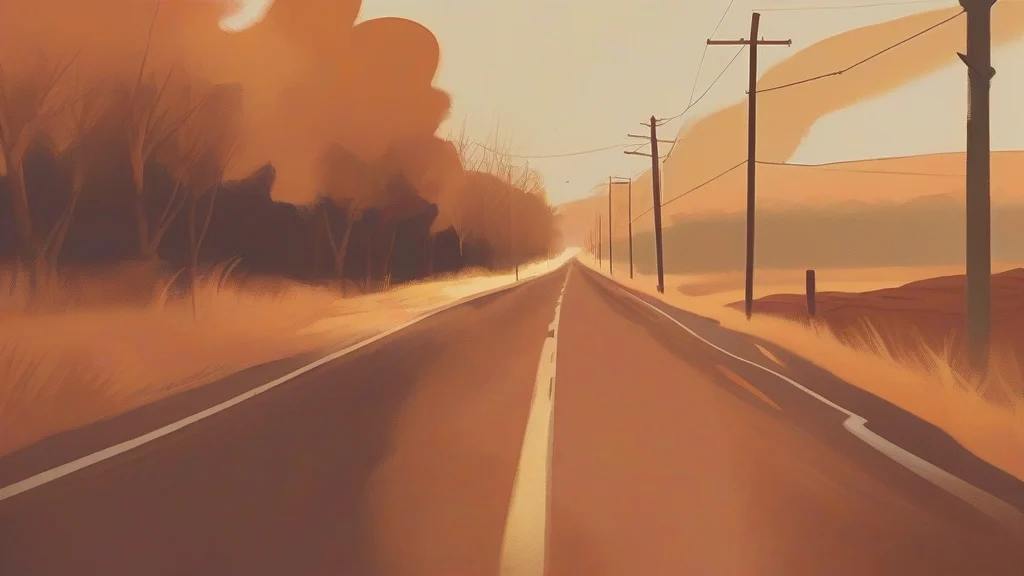
What does wayside mean?
Wayside means the side or edge of a road, path, or track, and it can also refer more generally to the land or verge beside such a route. The word is especially associated with travel, rural landscapes, and the plants, buildings, or small businesses that appear beside roads. In phrases such as “by the wayside,” it can suggest a place where someone pauses or an aside that is set aside from the main activity. As an adjective, wayside describes something located at the edge of a road: wayside flowers, wayside stalls, or a wayside inn. The term is used in both British and American English, though it has a mildly literary or traditional tone in everyday prose. Its usefulness lies in its ability to bring the margins of a journey into focus, recalling the overlooked spaces between destinations.
The side or edge of a road, path, or track; also the strip of land beside it.
"The old sign stood by the wayside for many years."
Often used in descriptions of travel, roads, and rural landscapes; “by the wayside” is a common set phrase.
Relating to or situated at the side of a road or path.
"Wayside flowers bloomed profusely after the rain."
Normally used attributively before a noun rather than predicatively.
The plural is grammatically possible but uncommon; writers often use the singular collectively when referring to roadside spaces along a route.
"The waysides were lined with hedges and flowering shrubs."
The wayside is where journeys pause: a quiet edge where travelers stop, flowers bloom, and small roadside businesses appear.
Reviewed by Deb Chak, Editor. AI-assisted content curated by RJS Tech Solutions LLP.
Where does wayside come from?
Wayside is an English compound formed from way and side. Both elements have Old English origins, and the compound has been used in English since the early modern period. Its development reflects the long-standing practice of naming the margins of a route after the route itself, a pattern also visible in related forms such as roadside.
How wayside is actually used
The noun is somewhat literary in general use but common in geographical and descriptive writing. As an adjective, it is usually used attributively before a noun, such as in wayside flowers or wayside stalls.