
What does whinstone mean?
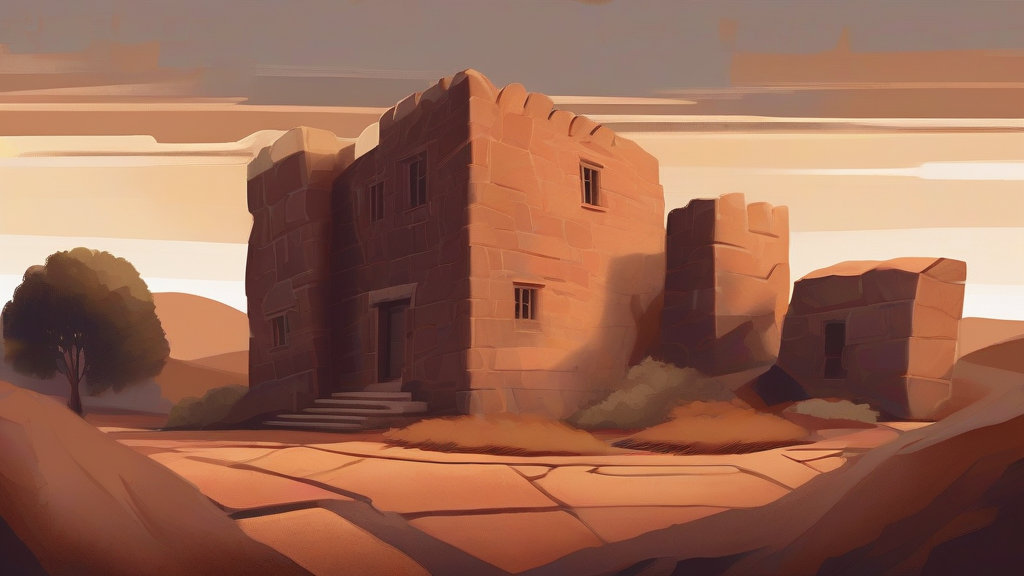
Whinstone is a chiefly northern British term for a hard, dark igneous rock. Its precise geological meaning varies by locality: in northern England it often denotes dolerite, while in southern Scotland the word is particularly associated with basalt. The material has traditionally been quarried for construction and used in walls, buildings, bridges, and other durable structures. It can also be discussed more broadly as a dark volcanic or igneous rock. Although dictionaries may preserve older senses for hard siliceous stones, its best-known modern use is specifically geological and architectural. The word is uncommon outside regional British English, but it is useful for understanding the geology and building history of northern Britain. Quarries supplied blocks locally, and the resulting buildings often retain a distinctly dark, rugged appearance. The name also occurs in the celebrated Whin Sill of northern England, a major geological formation composed chiefly of dolerite.
nounA hard, dark igneous rock, especially basalt or dolerite, found particularly in northern Britain.
- A hard, dark igneous rock, particularly basalt or dolerite, occurring in northern England and southern Scotland.
"The old church wall was built from locally quarried whinstone, its dark blocks weathering gracefully over the centuries."
"Local whinstone was used to construct the village's oldest buildings."
"The geological survey identified the exposed cliff as whinstone, a form of dolerite."
Usually encountered as a mass noun, but the plural can be used when individual pieces, blocks, or specimens are counted.
"The quarry yielded several large whinstones for the new bridge."
Whinstone is the northern British rock behind countless sturdy walls—and behind the name of the Great Whin Sill, a vast dolerite intrusion.
Reviewed by Deb Chak, Editor. AI-assisted content curated by RJS Tech Solutions LLP.
Etymology of whinstone
Whinstone is an English compound of the northern British word “whin” and the ordinary noun “stone.” Its development is associated with Scots and northern English usage, where “whinstane” is also a historical spelling. The element “whin” is also familiar from compounds such as “whinchat,” although its precise ancient origins are more complicated and are not certain enough to state confidently.
Related word forms
How whinstone is actually used
This is chiefly a regional British geological term. It is normally used as a mass noun, although a plural may be used when individual blocks or specimens are being counted. In modern northern English usage, it often refers especially to dolerite, while southern Scottish usage more commonly emphasizes basalt.