
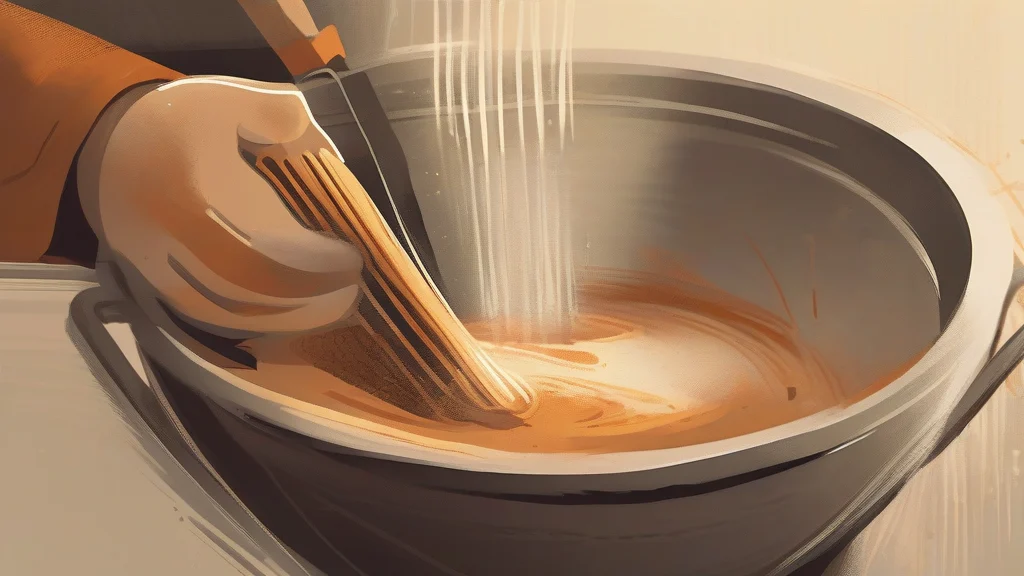
What does whisking mean?
Whisking conveys two closely related ideas. In cooking, it means beating or blending a food rapidly with a wire or handheld implement, most famously incorporating air into cream or egg whites, as in whisking egg whites into a meringue. The resulting action is energetic and purposeful, and the word often suggests a light, repeated motion rather than forceful stirring. In more figurative or literary contexts, whisking can imply swift movement, especially in phrases such as whisking something or someone away. Thus, a chef whisking a sauce and an author whisking a character out of a room share an image of brisk, efficient motion. Although whisking is a participle and gerund form of whisk, it is also a noun for the act of whisking. The word is equally natural in British and American English and is common in recipes, cooking instructions, and descriptive prose. It remains useful because it specifies both a technique and a distinctive speed or energy that ordinary stirring does not fully convey.
To beat or blend a substance rapidly with a whisk, especially to incorporate air into it; also, to move or take someone or something away swiftly.
"Whisk the mixture vigorously until the cream begins to hold its shape."
The culinary sense normally takes a direct object, such as “whisk the cream” or “whisk the egg whites.”
The act of beating or blending something with a whisk.
"The sauce thickened after a few minutes of constant whisking."
The plural is grammatically possible but uncommon; writers usually recast the sentence or use a more specific noun such as “whiskings of cream”.
"The recipe calls for slow whiskings of the cream between additions of sugar."
Whisking does more than mix: its rapid strokes can turn a liquid into a foam that holds its shape.
Reviewed by Deb Chak, Editor. AI-assisted content curated by RJS Tech Solutions LLP.
Where does whisking come from?
Whisking is formed from the Middle English verb whisk by adding the productive -ing suffix. Whisk was recorded in senses involving a brush-like implement, rapid movement, and beating with a whisk, although the precise historical development of these meanings is not certain. Its ultimate origin is uncertain, and it has sometimes been linked to Old Norse visk-, meaning a tuft or brush.
Related word forms
How whisking is actually used
In culinary contexts, “whisking” specifically suggests a rapid, repetitive beating or blending action, often with a wire or handheld implement. The phrase “whisking away” can sound lighthearted or brisk, especially when someone or something is removed with conspicuous speed.