
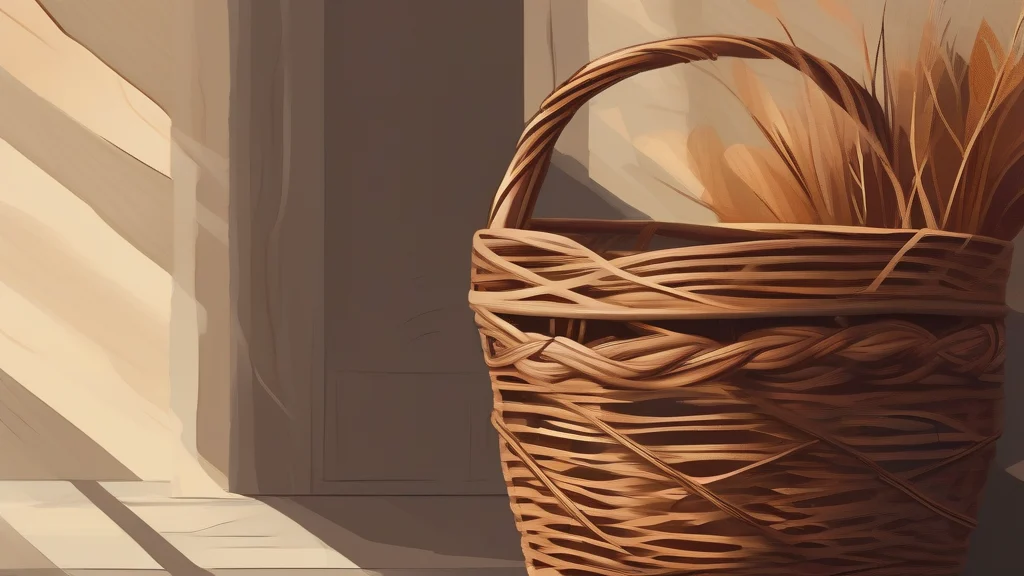
What does wickerwork mean?
Wickerwork is the weaving of flexible plant materials, most commonly willow twigs, into baskets, chairs, furniture, screens, and other objects. The word can denote the finished objects collectively or the craft and technique of making them. Wickerwork is valued because pliable branches can be bent and interwoven into strong, often intricate forms without requiring nails, glue, or other fasteners. Its appearance suggests traditional craftsmanship and a close connection with natural materials, so it is frequently associated with rural, rustic, coastal, or country-style decoration. The term is used in British and American English and is related to, but more specific than, the shorter word “wicker,” which can refer either to the plant material itself or more broadly to objects made from woven twigs.
nounWickerwork is the craft of weaving or intertwining flexible twigs, reeds, or similar materials. It also refers collectively to objects made by this process.
- Objects, decorative pieces, or other material formed by weaving wicker or similar flexible twigs and reeds.
- The craft or technique of weaving such materials.
"The veranda was shaded by elegant wickerwork blinds."
"Traditional wickerwork has been practiced in many cultures for baskets, furniture, containers, and architectural screens."
"The curator explained the regional differences in wickerwork weaving techniques."
The plural is uncommon; wickerwork is normally used as an uncountable collective noun.
"The collection includes several finely woven wickerworks."
Wickerwork turns flexible willow branches into useful objects without knots, nails, or glue.
Reviewed by Deb Chak, Editor. AI-assisted content curated by RJS Tech Solutions LLP.
Where does wickerwork come from?
Wickerwork is an English compound formed from wicker and work. The word wicker was current in Middle English for willow and for material woven from flexible twigs, while the compound wickerwork emerged in early modern English for the products of this weaving process. The word therefore combines the material with the activity of making or fashioning objects from it.
How wickerwork is actually used
The term is neutral in register but often evokes traditional craftsmanship, natural materials, and a rustic or country aesthetic. It is used in both British and American English.
Easily confused with wickerwork
Wicker is the pliable plant material, especially willow twigs, used for weaving, whereas wickerwork is the finished work or the objects made from it.