
What does wicker mean?
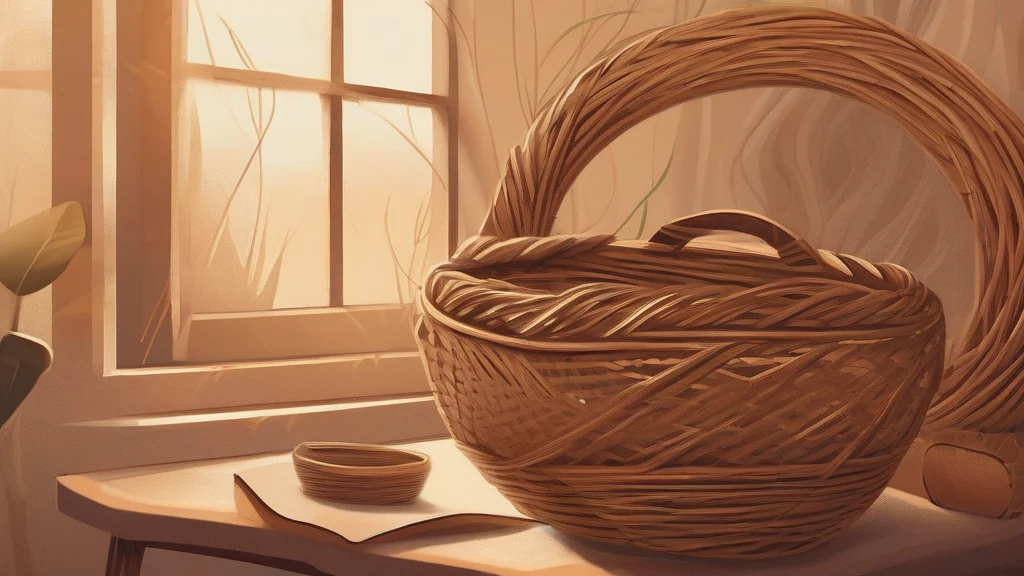
Wicker is the English name for a traditional material made by weaving slender, flexible twigs or branches, especially willow and osier. The material becomes wickerwork, and objects fashioned from it are commonly called wicker baskets, chairs, and similar pieces. Because it is light, flexible, and visually warm, wicker is especially associated with household goods and with rustic or coastal interiors. In ordinary use, wicker functions both as an uncountable noun and as an adjective: "a wicker chair" describes what the chair is made from, while "the chair is wicker" identifies its material. The noun can also refer broadly to woven twig work and, historically, to individual baskets or comparable objects. Although the word evokes traditional craft, it is not restricted to handmade goods; modern manufacturers also produce synthetic wicker and plant-based imitations. Etymologically, wicker entered English from Old Norse, with a deeper Germanic history associated with willow and the bending of twigs. It remains a useful example of how a raw material and the craft made from it can share a single word.
Thin, flexible twigs or branches, especially willow or osier, woven to make baskets and other objects; also, collectively, such woven material.
"The basket is made from locally harvested wicker."
Normally uncountable when referring to the material. The countable use, meaning an individual basket or similar object, is uncommon.
Made from wicker or from woven twigs or branches.
"They sat beneath a large wicker parasol."
Used attributively, usually before a noun.
Rare and countable; wicker is ordinarily used as an uncountable noun when referring to the material.
"The stall displayed several wickers filled with apples and pears."
Plant and craft share a name: Old Norse víkve covered both willow and wickerwork before English borrowed it.
Reviewed by Deb Chak, Editor. AI-assisted content curated by RJS Tech Solutions LLP.
Where does wicker come from?
The English noun entered Middle English as wikker, borrowed from Old Norse víkve, a term associated with willow and wickerwork. Its deeper Germanic and Indo-European history is commonly connected with roots relating to bending or turning, which also account for relationships with words for willow and flexible twigs. The ancient derivation is not wholly secure, so the exact prehistory is described more cautiously than the Old Norse borrowing into English.
Related word forms
How wicker is actually used
As a noun, wicker is usually an uncountable material term, although an individual basket or similar object can occasionally be counted as a "wicker." As an adjective, it normally appears before a noun. The word is neutral in register and is used for both handmade and modern imitation wicker products.