
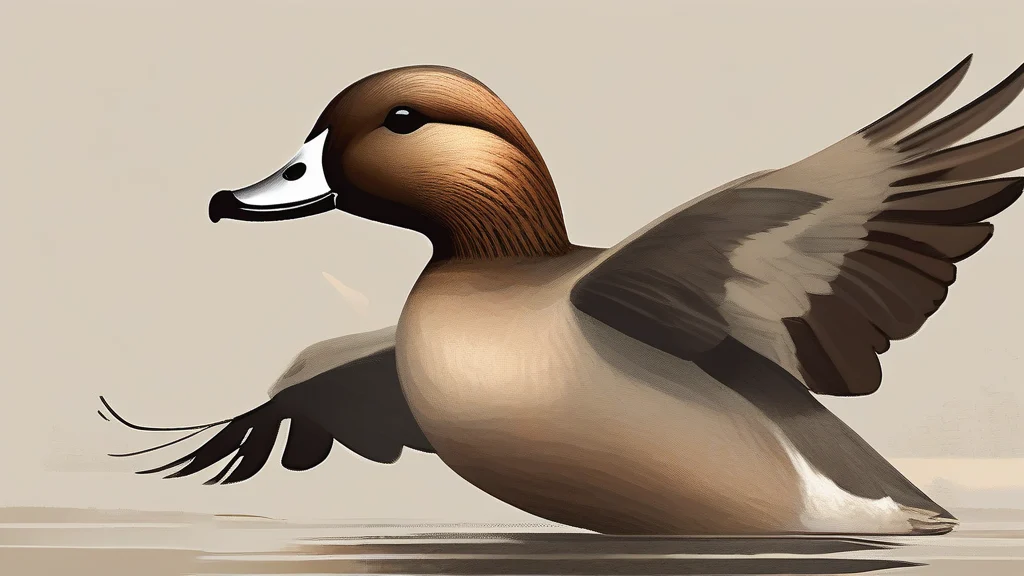
What does widgeon mean?
Widgeon is an alternative English spelling of wigeon, the common name for a small dabbling duck of the species Anas crecca. The Eurasian population is also widely called the Eurasian teal, a name that can distinguish it from closely related forms in other parts of the world. Widgeons are compact ducks associated with wetlands, marshes, lakes, and estuaries, where they feed on aquatic vegetation, seeds, and small invertebrates. The word often appears in writing about birdwatching, hunting, and historical sport, while modern ornithological references generally prefer “wigeon.” Although the two spellings refer to the same bird, “widgeon” has a somewhat old-fashioned or traditional character and can add variety to descriptions of wildlife and the countryside. It is a useful word for readers interested in regional variants, hunting literature, or the distinctive names given to British and Eurasian birds.
nounA small dabbling duck, Anas crecca, also known as the Eurasian teal. “Widgeon” is an alternative spelling of the more usual “wigeon.”
- A small dabbling duck, Anas crecca, also known as the Eurasian teal.
"The sheltered estuary was dotted with widgeons, quietly feeding in the shallow water."
"A flock of widgeons rose from the reeds as the gunshots echoed across the marsh."
"The field guide identifies the bird as a widgeon, although most contemporary ornithological texts spell it “wigeon.”"
The regular plural is “widgeons.” The corresponding form of the more usual spelling “wigeon” can also appear as “wigeon.”
"Several widgeons fed along the muddy shoreline."
One small duck, two spellings: the wigeon is usually called a wigeon, but “widgeon” remains a valid variant.
Reviewed by Deb Chak, Editor. AI-assisted content curated by RJS Tech Solutions LLP.
Etymology of widgeon
The name entered English from Old French “wigeon,” appearing in Middle English and later developing into the established spelling “wigeon.” Its ultimate origin is uncertain, so it should not confidently be connected to a particular Latin or Greek word. “Widgeon” developed as an English spelling variant, probably reflecting scribal or regional pronunciation and spelling traditions.
How widgeon is actually used
The spelling is encountered in British and American sporting, literary, and older ornithological contexts. In modern birding and scientific literature, “wigeon” is the more usual spelling.
Easily confused with widgeon
A widgeon is a small dabbling duck, whereas a pigeon is a member of the bird family Columbidae.