
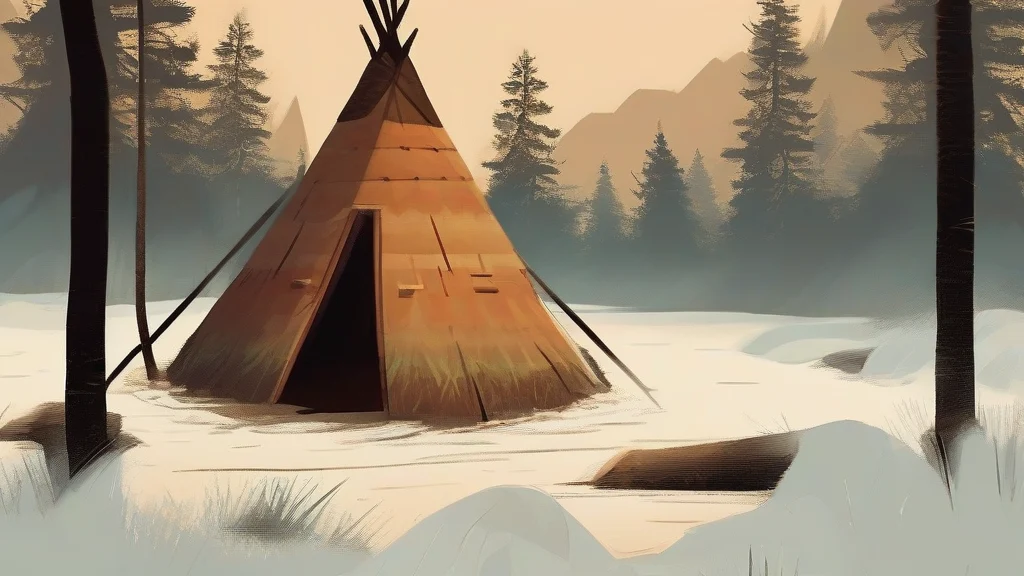
What does wigwam mean?
Wigwam is a North American English noun for a shelter traditionally made by Indigenous peoples from poles covered with bark, hides, or woven materials. Historically, the word particularly evokes the bark-covered and domed dwellings associated with Algonquian-speaking communities of the northeastern woodlands, although its modern use can be broader and may describe a tent, hut, or decorative structure. In English, the word was borrowed from an Algonquian language, commonly identified as Ojibwe, rather than coined as a generic English term. It is sometimes confused with tepee or tipi, but those words more specifically denote portable, conical tents associated with Plains peoples. Wigwam also appears in historical descriptions, museums, educational materials, literature, and discussions of Indigenous architecture and material culture. Because the term is connected with a specific cultural and architectural tradition, it is best used with attention to the people and region being discussed.
nounA shelter traditionally built by Indigenous peoples of North America from poles covered with bark, hides, or woven materials. The term is also used more broadly for a tent or hut resembling such a structure.
- A shelter traditionally built by Indigenous peoples of North America from a framework of poles covered with bark, hides, or woven materials.
"The museum exhibit explained how a wigwam's frame was traditionally covered with bark or woven mats."
"The wigwam stood near the river, its bark-covered frame blending into the surrounding woodland."
"The children's book describes the family building a wigwam from saplings and woven mats."
The regular plural adds -s.
"The historical site includes several wigwams arranged around a central fire."
Entered English from an Algonquian language, wigwam preserves the name of a dwelling built from bent poles and bark.
Reviewed by Deb Chak, Editor. AI-assisted content curated by RJS Tech Solutions LLP.
Where does wigwam come from?
The English word was borrowed from an Algonquian language, commonly identified as Ojibwe, where wiigwaam denotes a bark-covered dwelling. The borrowing entered English through accounts describing Indigenous peoples and their homes in North America. English later developed the alternative forms wickiup and wikiup, while the original term remained the standard modern spelling.
How wigwam is actually used
Wigwam is chiefly North American. It is often contrasted with tepee or tipi, which more specifically refer to portable conical tents of the Plains, although modern usage can overlap. In contemporary English it may also be used for a decorative hut, classroom model, or themed structure.
Easily confused with wigwam
A wigwam is generally a pole-and-bark shelter, while a tepee is specifically a conical tent made from poles and animal hides; the terms overlap in modern use but have different historical and cultural associations.
Wickiup is an alternative spelling or historical variant of wigwam rather than a separate kind of shelter.