
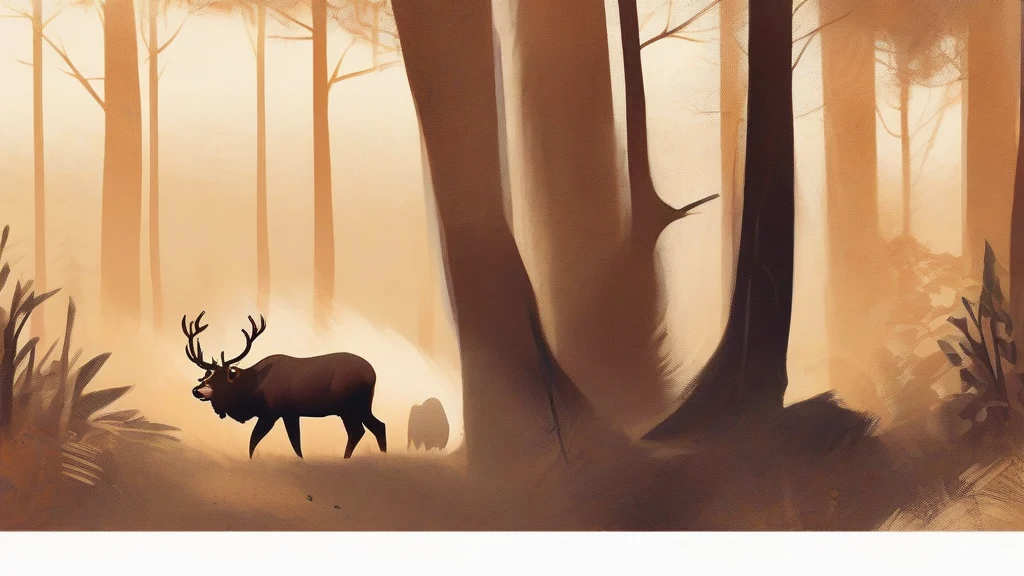
What does wildlife mean?
Wildlife is a collective noun for animals and plants living freely in natural habitats, often within a particular country, reserve, or ecosystem. The word is especially associated with conservation, ecology, and the study of species and habitats, but it also appears in travel, agriculture, land management, and environmental policy. Although wildlife can refer broadly to all uncultivated living things, it is commonly used more specifically for wild animals, including mammals, birds, reptiles, amphibians, fish, and invertebrates. In everyday use, the term often carries a positive connotation, suggesting natural beauty, biodiversity, and ecological value. It can also be used neutrally in discussions of conflict, disease, habitat loss, or population management. Unlike “wilderness,” which names a type of area, “wildlife” names the living organisms associated with such areas. It is normally treated as an uncountable noun and is frequently placed before words such as “habitat,” “conservation,” and “management.”
nounWild animals and plants collectively, especially those living freely in natural habitats. The term is also used for the animals of a particular region or ecosystem.
- Wild animals and plants collectively, especially those living in natural habitats or belonging to a particular region.
"The national park protects wildlife and rare plant species across its forests and wetlands."
"Conservationists are working to protect wildlife disturbed by logging and road development."
"At dusk, the reserve's wildlife became visible along the river."
Wildlife is normally an uncountable mass noun, although singular “wildlife” is used when referring to an individual wild animal.
"The injured wildlife was treated and returned to the reserve."
Wildlife means more than charismatic animals: it includes every free-living plant and animal that makes up a natural ecosystem.
Reviewed by Deb Chak, Editor. AI-assisted content curated by RJS Tech Solutions LLP.
Where does wildlife come from?
Wildlife is an English compound of “wild” and “life.” Its two elements descend from Old English roots, with “wild” represented by wilde and “life” by lif, and the compound is attested in English by the 14th century. The modern meaning refers collectively to living things in their natural, uncultivated state.
How wildlife is actually used
Wildlife is normally used as an uncountable mass noun, so “wildlifes” is not standard. It is frequently used attributively, as in “wildlife habitat” and “wildlife protection.”
Easily confused with wildlife
Wild is primarily an adjective meaning uncultivated, uncontrolled, or untamed, whereas wildlife is a collective noun for wild animals and plants.
A wilderness is an undeveloped or sparsely populated natural area, while wildlife refers to the living organisms found in such places.