
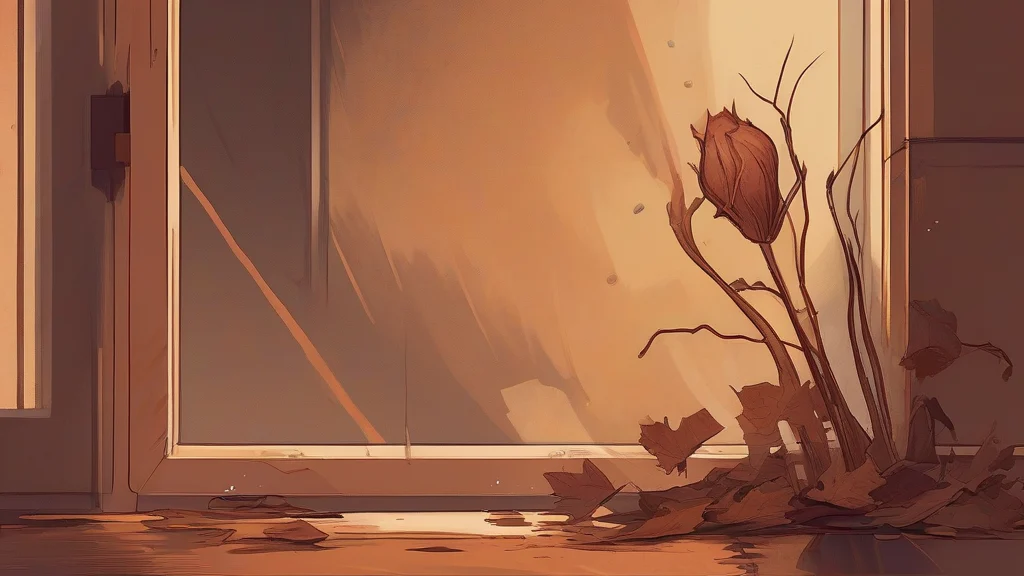
What does wilting mean?
Wilting is the present participle of the verb wilt, meaning to lose freshness, strength, or uprightness, especially through a lack of water. In its literal sense, it describes leaves, flowers, or plants that droop and lose their firm, healthy appearance. The word can also be used figuratively for people becoming weak or listless and for colours, emotions, efforts, or other abstract qualities fading in intensity. Wilting is often gentler than dying: a plant may wilt and recover if watered in time, while the word can nevertheless suggest a noticeable decline. The expression is common in ordinary descriptions of gardens, heat, drought, and plant care, and it also appears in more literary contexts when writers emphasize fading beauty, energy, or hope. Its usefulness lies in capturing a process of gradual loss rather than simply saying that something has become weak or unsuccessful.
To lose freshness, strength, or uprightness, especially because of a lack of water; to become weak, listless, or diminished.
"The roses wilted quickly during the unusually hot week."
Often used intransitively for plants, and figuratively for people, emotions, efforts, or qualities that lose vitality.
That is drooping or losing freshness, strength, or intensity.
"The florist placed the wilting bouquets near the back of the shop."
This is a participial adjective formed directly from the verb wilt.
In a wilting plant, gravity wins the argument as water loss causes the cells to lose their internal pressure.
Reviewed by Deb Chak, Editor. AI-assisted content curated by RJS Tech Solutions LLP.
Etymology of wilting
Wilting is the present-participle form of the English verb wilt, a word whose history extends back to Middle English and which has long been associated with losing moisture, strength, or vitality. English wilt developed both literal meanings for drooping plants and figurative meanings for people, colours, and other things that lose vigour. The modern form wilting follows the ordinary English formation of the present participle by adding -ing to the verb.
Related word forms
How wilting is actually used
Wilting is neutral in register when referring to plants, but it is somewhat literary or figurative when describing a person, mood, or abstract quality. It commonly suggests a gradual loss of vitality rather than a sudden destruction.
Easily confused with wilting
Wilting describes losing freshness, strength, or vitality, whereas willing describes being inclined or prepared to do something.
Wilting usually suggests drooping or fading, often from lack of water, while withering more often suggests becoming dry, shrivelled, and completely spent.