
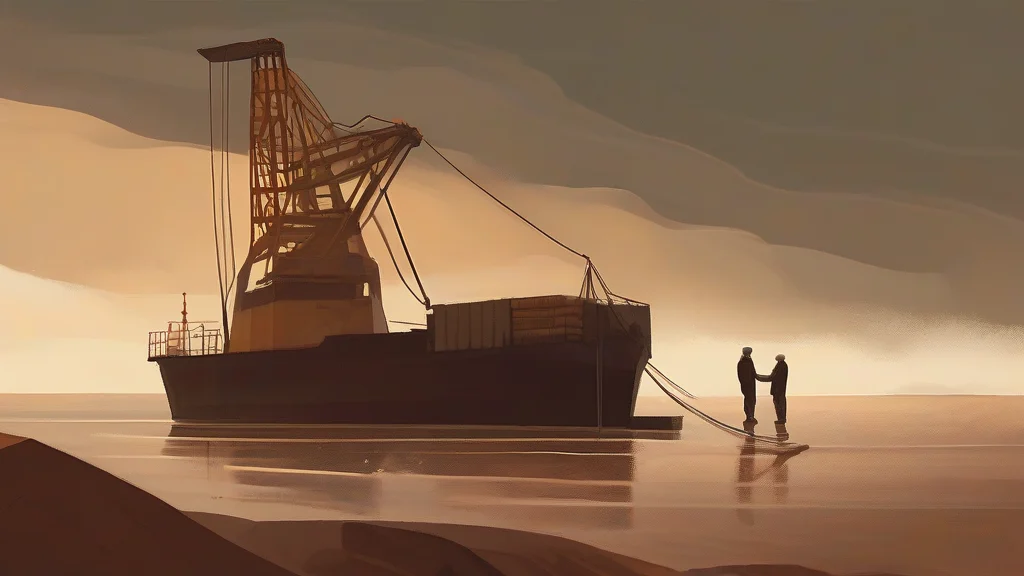
What does windlassed mean?
“Windlassed” is a rare nautical word with two grammatical uses. As an adjective, it describes a vessel or mechanism fitted with a windlass—a hand-cranked or otherwise powered spindle used to wind chains, cables, or other tackle, especially to raise an anchor. As a verb, “windlassed” is the past tense and past participle of “windlass,” meaning that an anchor, chain, or load was hauled, wound, or lifted with such a device. The adjective is uncommon in ordinary speech and sounds literary, archaic, or specialized, while the verb form is chiefly associated with maritime work and older accounts of sailing. A windlassed ship therefore need not imply that its windlass was operating; the word ordinarily identifies the equipment. Used carefully, “windlassed” evokes the practical engineering of sailing vessels and the labor involved in handling heavy gear aboard ship.
Fitted or equipped with a windlass.
"The old fishing vessel was windlassed with a heavy chain and iron barrel."
Chiefly literary or nautical, and relatively uncommon in modern prose.
Hoisted, wound, or pulled something using a windlass; the past tense and past participle of “windlass.”
"The sailors windlassed the anchor and secured the chain below deck."
Used chiefly in maritime, historical, and technically descriptive contexts.
Before engines, a ship’s windlass turned brute force into leverage—one crank at a time.
Reviewed by Deb Chak, Editor. AI-assisted content curated by RJS Tech Solutions LLP.
Etymology of windlassed
English “windlassed” was formed by adding the adjectival ending -ed to “windlass,” while the verb form uses the same ending as its past tense and past participle. The noun “windlass” entered Middle English as “windlas” and is generally traced to an Old Norse compound associated with wind and an axle or beam. Related forms include Dutch “windas” and German “Windlass.”
Related word forms
How windlassed is actually used
Rare and chiefly nautical. The adjectival use is literary, archaic, or specialized, while the verb form appears mainly in maritime writing and historical accounts of sailing. As an adjective, it normally describes a vessel or mechanism equipped with a windlass, whether or not the device is operating.