
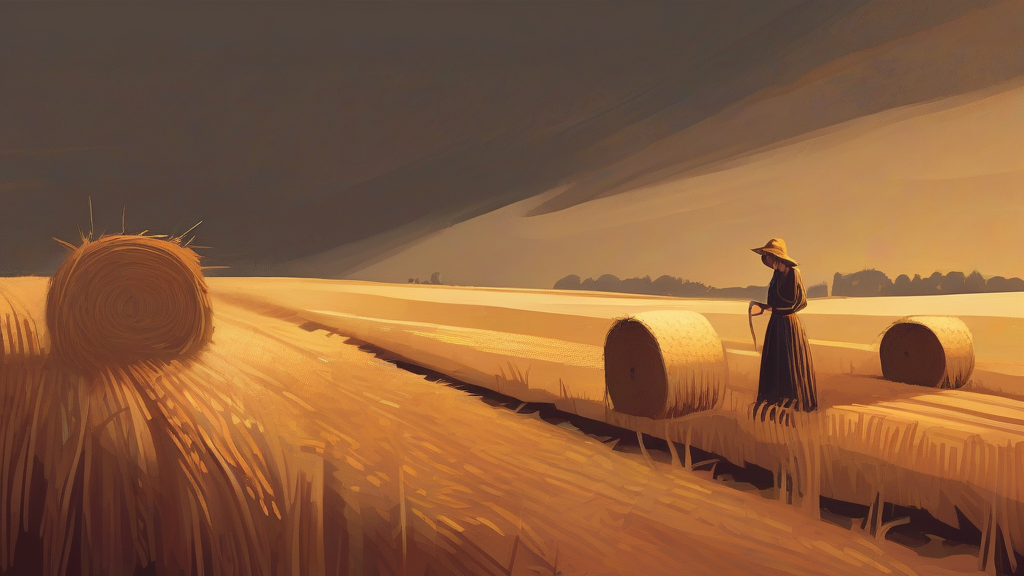
What does windrowed mean?
Windrowed describes material or land arranged in long, narrow rows or ridges. Its agricultural sense applies to hay, grain, cut grass, or soil that has been raked into parallel windrows, usually so that it can dry, be gathered, or be collected efficiently. The word may also evoke the distinctive appearance of fields after harvesting, when lines of stubble and gathered vegetation form a regular pattern across the ground. As a verb form, windrowed is the past tense and past participle of windrow, meaning to rake or gather something into rows. Although associated chiefly with farming, it can be applied more broadly to landscapes marked by long parallel ridges. Windrowed is somewhat literary and evocative rather than everyday, giving ordinary rural scenes a vivid, orderly, and sometimes nostalgic quality.
Arranged in long rows or ridges, especially crops, hay, or soil; marked by such rows.
"The windrowed stubble formed neat lines across the harvested field."
Common in agricultural writing and evocative descriptions of rural landscapes.
Raked or gathered into long rows or ridges; the past tense and past participle of windrow.
"They windrowed the hay before the storm reached the valley."
Used transitively, with the material being arranged as the object.
Windrowed landscapes turn the remnants of harvest into long parallel lines, revealing the marks of human labor across the earth.
Reviewed by Deb Chak, Editor. AI-assisted content curated by RJS Tech Solutions LLP.
Etymology of windrowed
The compound windrow developed in early modern English from wind, meaning “wind,” and row, meaning “line” or “ridge.” Its original agricultural meaning referred to hay or grain arranged in long rows, a practice that exposed the crop to air for drying. Windrowed is the later participial derivative used for material already arranged in such rows or for the completed action of forming them.
How windrowed is actually used
The word is most often used in agricultural and rural contexts. In its participial adjective sense, it can also describe any surface marked by long, regular ridges, although this use is less common.