
What does windrowing mean?
Windrowing is the practice of gathering harvested crops, hay, or straw into long, orderly lines called windrows. Farmers may use a rake, a mechanical windrower, or specialized equipment to move the material, especially so that it can dry evenly and be collected more easily later. The word is most often used as a present participle, as in "windrowing hay," and is particularly associated with haymaking and cereal harvesting. Although the term comes from farming, it can also describe similar activities involving other loose materials, such as leaves, seaweed, or straw. Windrowing should not be confused with winnowing: windrowing means putting material into rows, while winnowing means separating useful grain from unwanted chaff. Together, the word evokes the orderly, practical work of preparing a harvest for the next stage.
To gather hay, grain, straw, or other material into long rows or windrows.
"They are windrowing the cut grass before the evening dew settles."
Usually used in the present-participle form, particularly in agricultural contexts.
The action or process of gathering harvested material into rows.
"Windrowing improves drying and makes the hay easier to collect."
The plural is rare because the noun is normally used in the singular for the general agricultural process.
"The two windrowings took place on different parts of the farm."
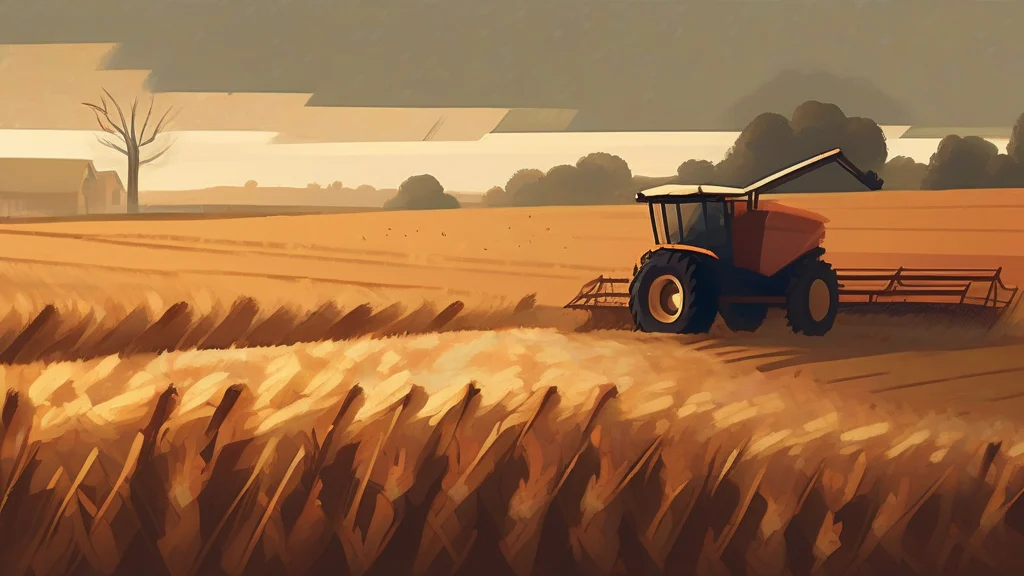
Windrowing gives a harvested field its familiar stripes, turning loose crops into orderly lines ready for drying, transport, or collection.
Reviewed by Deb Chak, Editor. AI-assisted content curated by RJS Tech Solutions LLP.
Etymology of windrowing
The English compound windrow is formed from wind and row, with row referring to an arranged line and wind carrying the older sense of moving or turning material. The verb developed in agricultural language for the process of putting cut crops into rows. The related agent noun windrower arose from the same base, first for a person or device that makes windrows and later especially for the harvesting machine. The compound and its derivatives are characteristic of English agricultural vocabulary rather than borrowings from a non-English language.
Related word forms
How windrowing is actually used
Windrowing is chiefly an agricultural verb and is most often encountered as a present participle, especially in phrases such as "windrowing hay." It can sound practical and technical in farm reports, while remaining understandable in general prose. The related noun "windrower" can mean either the machine used for this work or a person who performs it.
Easily confused with windrowing
Windrowing arranges harvested material into rows, whereas winnowing separates grain from chaff by blowing or passing it through air.