
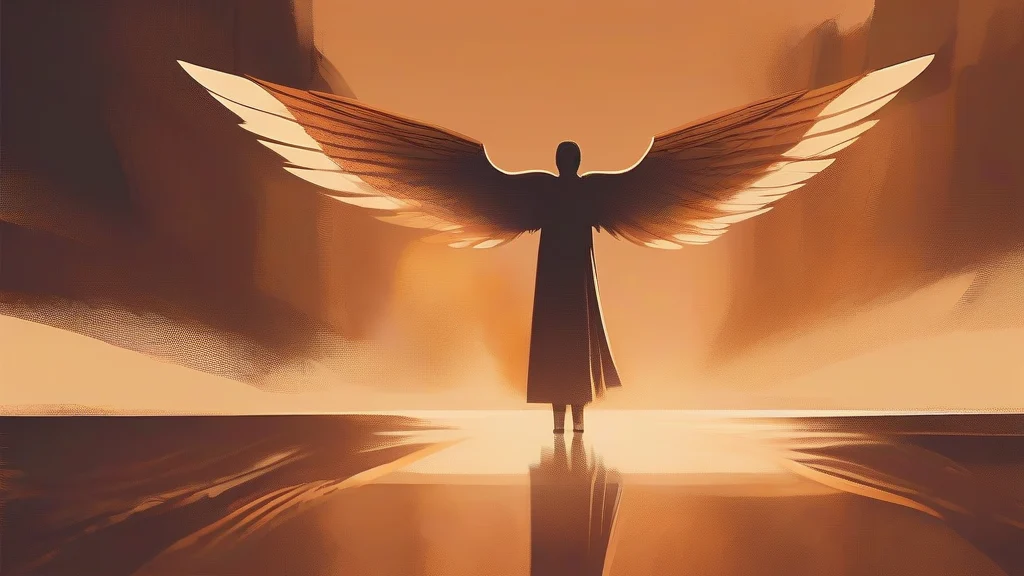
What does wingy mean?
In contemporary English, “wingy” is chiefly an adjective describing writing, rhetoric, ideas, or plans that are elevated, fanciful, or disconnected from practical constraints. Calling prose “wingy” suggests that it soars imaginatively but may lack substance, realism, or usefulness. The word can also have a literal, poetic sense: something having wings or resembling a wing in form. Its figurative use often carries a mildly critical or humorous tone, implying that a conception is too impractical or visionary to be implemented, though it can sometimes be used approvingly of bold or imaginative thought. “Wingy” is attested in both British and American English but is less common than general alternatives such as impractical, unrealistic, or fanciful. It is especially useful when describing language or plans that appear grand in conception while remaining questionable in execution.
Fanciful, lofty, or impractical, especially of writing, ideas, rhetoric, or plans.
"The committee rejected the proposal as too wingy to implement."
Chiefly literary; often mildly critical, though it may also suggest imaginative boldness.
Having wings or resembling a wing in form.
"A wingy creature passed silently above the trees."
This literal sense is uncommon and often occurs in poetic or descriptive writing.
What began as a description of something literally winged became a warning label for ideas too magnificent to pay the bills.
Reviewed by Deb Chak, Editor. AI-assisted content curated by RJS Tech Solutions LLP.
Etymology of wingy
“Wingy” was formed in English by adding the suffix “-y” to the noun “wing,” which is attested in Old English. The adjective originally expressed the literal sense of having or resembling wings and later developed a figurative sense for writing or ideas that seemed airy, elevated, or impractical. Its longer history reflects a characteristic English pattern in which a concrete physical descriptor acquires a metaphorical meaning through association with flight.
How wingy is actually used
The figurative sense is chiefly literary and mildly critical or dismissive. The literal sense is comparatively rare and may sound poetic, archaic, or descriptive.
Easily confused with wingy
Windy refers to moving air, whereas wingy refers literally to wings or figuratively to ideas and writing that are fanciful or impractical.