
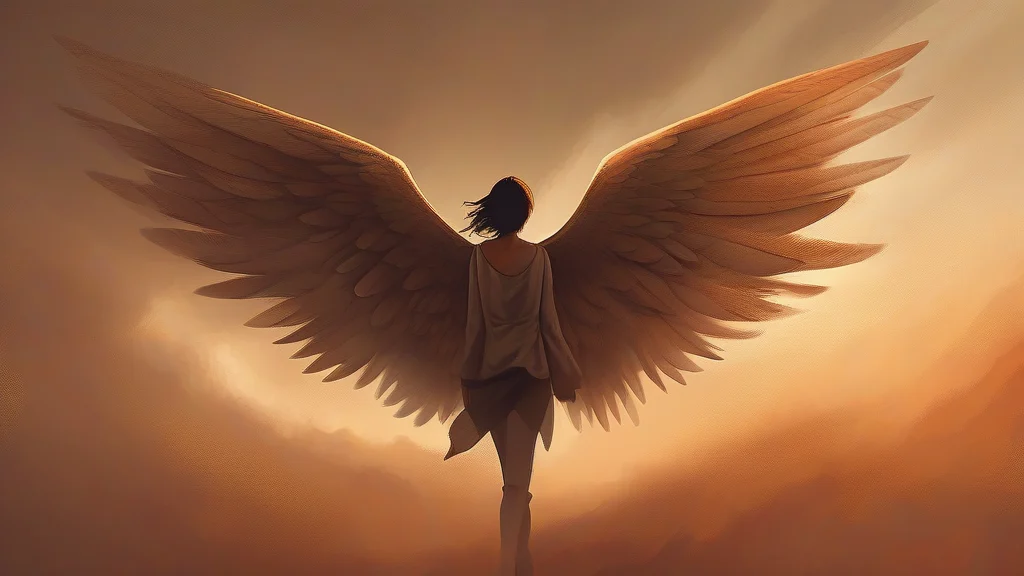
What does winged mean?
Winged is an adjective meaning chiefly “having wings.” It naturally describes birds, insects, and mythological beings, while also serving in technical descriptions for parts or structures with winglike projections. In literary and figurative contexts, winged can suggest swift movement, elevation, or an ability to fly despite obstacles, as in a runner who seems winged or in language described as “winged.” The literal sense is standard in both British and American English and is not confined to zoology: winged can characterize a plant, building, machine, or image. Its figurative use is more elevated and often poetic than its ordinary descriptive use. The word is especially useful because one short form connects a precise physical description with the vivid image of flight, allowing writers to move easily from the literal to the figurative without changing vocabulary.
adjectiveHaving wings or winglike parts; provided with winglike projections or extensions. In literary use, it can describe someone or something that is swift or moves as if flying.
- Having wings, as a bird, insect, or mythological being does.
- Provided with winglike projections or extensions.
- Figuratively, swift or moving as if on wings, especially in literary use.
"A winged beetle hovered above the ivy before disappearing into the dusk."
"A winged beetle settled briefly on the garden gate."
"The sprinter covered the final stretch as if winged, leaving the crowd roaring."
Hermes’ winged sandals, a winged horse, and a winged beetle all share one image: flight made visible.
Reviewed by Deb Chak, Editor. AI-assisted content curated by RJS Tech Solutions LLP.
Where does winged come from?
Winged was formed in Middle English by adding the adjective-forming suffix -ed to wing. Wing descends from Old English winge and Proto-Germanic, with close cognates in languages such as Danish and Swedish in the form vinge. Its literal sense of “having wings” is primary, while the literary associations with speed and airborne movement developed from the image of flight.
How winged is actually used
The literal sense is neutral and common in British and American English. Figurative uses are generally more literary and elevated, suggesting speed, freedom, or movement through the air.