
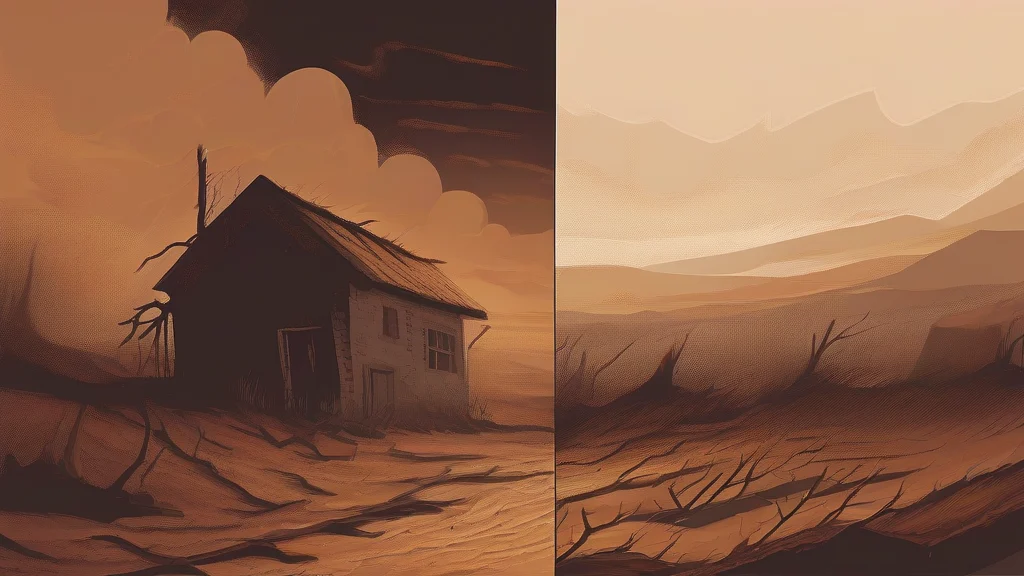
What does wither mean?
Wither is a verb describing the process of drying, shriveling, and losing vitality. It is especially common for plants whose leaves or flowers have been damaged by heat, drought, age, or neglect, but it can also be used figuratively to describe people, organizations, or reputations becoming weak or ineffective. The related adjective withered often implies a visibly deteriorated condition, as in withered branches or a withered career. In constructions such as wither away, the word conveys a gradual and often uninterrupted decline. Although it can sound descriptive rather than emotional, its figurative uses may carry a negative connotation of neglect, failure, or irreversible decay. The word is natural in both British and American English and is broadly understood as a somewhat literary or evocative alternative to the plainer words wilt, dry, and fade.
verbTo become dry, shriveled, and lose freshness or vitality, especially as a plant. It can also be used transitively to cause something to wither.
- To become dry, shriveled, and lose freshness, beauty, strength, or vitality.
- To cause something to become dry, shriveled, or depleted of vitality.
"The flowers began to wither in the heat."
"The leaves withered after several weeks without rain."
"Years of neglect withered the building's once-vibrant reputation."
Wither grew from an Old English word for something dry and shriveled—imagery still visible when a flower loses its color and collapses.
Reviewed by Deb Chak, Editor. AI-assisted content curated by RJS Tech Solutions LLP.
Where does wither come from?
The word descends from Old English wither, meaning “dry” or “shrivelled,” and ultimately from a Germanic root associated with dryness and atmospheric conditions. In Middle English, it developed into a verb meaning to become dry or shriveled, later extending to the figurative sense of losing freshness or vitality. It is related to weather, although the two words now have distinct meanings and usage patterns.
Related word forms
How wither is actually used
The word is used both transitively and intransitively. Figurative uses can describe people, places, institutions, or reputations losing strength and vitality, often with a suggestion of age, neglect, or decay.
Easily confused with wither
Wither means to become dry and shriveled or to lose vitality, whereas weather refers to the atmospheric conditions, such as rain, wind, or sunshine.