
What does woad mean?
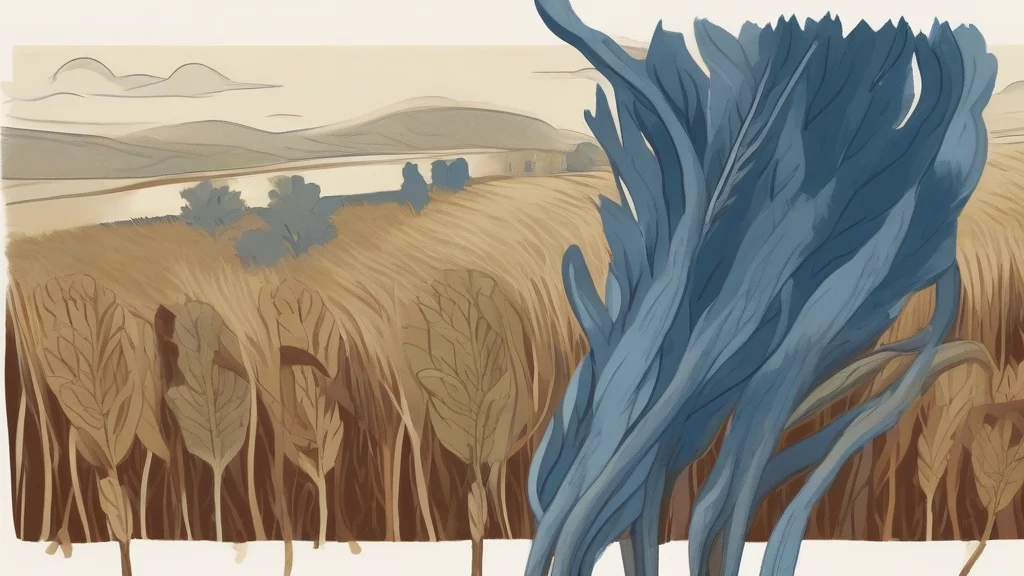
Woad is an old name for both a blue dye and the European plant from which it was obtained. The plant, Isatis tinctoria, has broad green leaves and small yellow flowers; its leaves contain the coloring matter needed to produce a deep blue. For centuries, especially in Britain and elsewhere in Europe, dyers cultivated and processed woad, making it an important natural colorant before synthetic and imported blue dyes became dominant. Today the word is encountered mainly in historical writing, botanical descriptions, discussion of traditional dyeing, and the study of historical color and craft. In ordinary modern language it most often names the dye itself rather than the living plant. Because its history is tied to agriculture, textile production, and long-standing efforts to make blue color from local crops, woad remains a vivid example of how ordinary plants have shaped trade and visual culture.
nounA blue dye made from the leaves of a European plant, Isatis tinctoria, or the plant itself.
- A blue dye made from the leaves of the woad plant.
- The woad plant itself, a European herb with broad green leaves and small yellow flowers.
"Dyers used woad to produce a deep, lasting blue."
"Cheap blue cloth was dyed with woad long before synthetic indigo became widely available."
"The garden's broad-leaved woad has self-seeded beside the path."
The plural is possible but uncommon; the dye is normally treated as a mass noun.
"Each of the woads in the field yielded enough leaves for a small vat of dye."
For much of European history, blue often came not from imported indigo but from woad, a crop grown close to home.
Reviewed by Deb Chak, Editor. AI-assisted content curated by RJS Tech Solutions LLP.
Etymology of woad
The English word descends from Old English wāde, the name of the dye plant, and ultimately from a Germanic root. Early forms were used both for the plant and for the blue dye prepared from it. It has relatives in forms such as German Waid and Dutch woed, reflecting the plant's broad historical presence in European dyeing traditions.
How woad is actually used
In modern English, woad is chiefly encountered in historical writing, botanical descriptions, traditional dyeing, and the study of historical color and craft. The name for the dye remains more common than the name for the plant.
Easily confused with woad
Woad is a plant that produces a blue dye, whereas weld is a plant historically used to produce a yellow dye.