
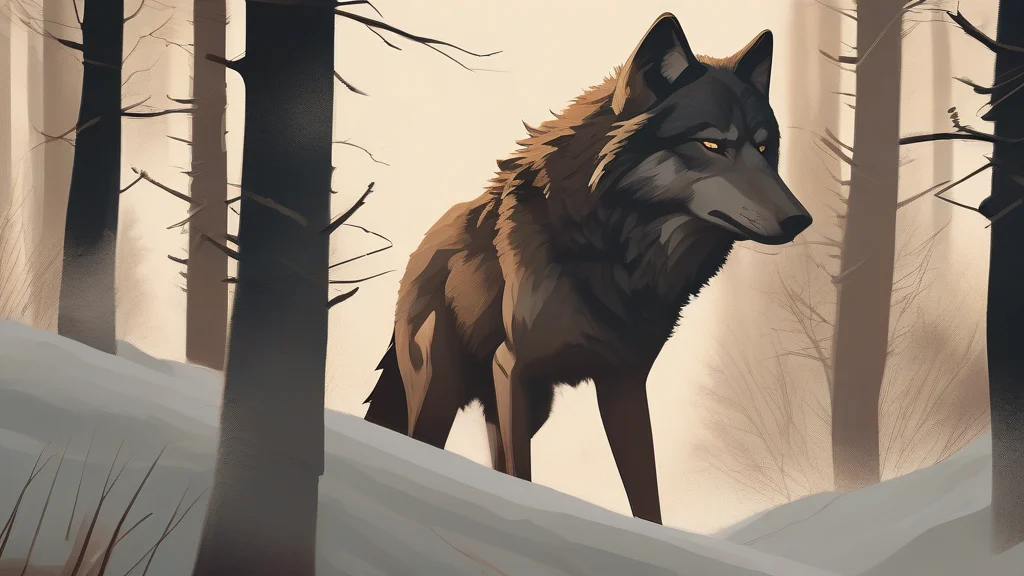
What does wolfer mean?
A wolfer is a person who hunts wolves. The word also has an older figurative sense: someone who preys upon or pursues others, with associations of cunning, danger, and predation. Because it is uncommon today, “wolfer” is likely to sound archaic, literary, or regional to most modern English speakers, and the intended sense may depend heavily on context. In its literal sense, a wolfer would be a hunter skilled in locating, tracking, and pursuing wolves, whether for sport, protection of livestock, or some other purpose. In its figurative sense, the word evokes someone who stalks a victim or exploits others. This dual history gives the word a memorable place between the literal wolf and the metaphorical wolf: a wolfer can be the hunter of wolves or, in older usage, a person who behaves like a wolf. It is therefore a useful word for discussing both hunting traditions and predatory behavior, although it should not be substituted for the more familiar “wolf” or “wolf hunter” without regard to tone and period.
A person who hunts wolves.
"The wolfer signaled to the others that the wolves were approaching."
Uncommon and somewhat literary; “wolf hunter” is more usual in modern English.
A person who preys upon or pursues others.
"The story casts the merchant as a wolfer who preys upon unsuspecting travelers."
This is an archaic or figurative use and may sound deliberately heightened or old-fashioned.
The regular plural is wolfers, though the word itself is uncommon.
"Two wolfers tracked the pack into the hills."
A wolfer is to wolves what a shepherd is to sheep—but the role has a wilder history behind it.
Reviewed by Deb Chak, Editor. AI-assisted content curated by RJS Tech Solutions LLP.
Etymology of wolfer
Wolfer derives from wolf, an Old English word for the animal, with the suffix -er, a standard way of forming a person associated with an activity. The word is especially associated with the older sense of a person who hunts or preys upon wolves; its figurative sense developed from the animal’s traditional symbolism as a dangerous predator. The English form belongs to the same broad Germanic word family represented by German Wolf and by cognates such as Dutch wolf.
How wolfer is actually used
The word is uncommon in modern English and has a dated or literary quality. Context determines whether it refers literally to a wolf hunter or figuratively to a predatory person.
Easily confused with wolfer
A wolf is the animal itself; a wolfer is a person associated with wolves, especially one who hunts them.