
What does wolflike mean?
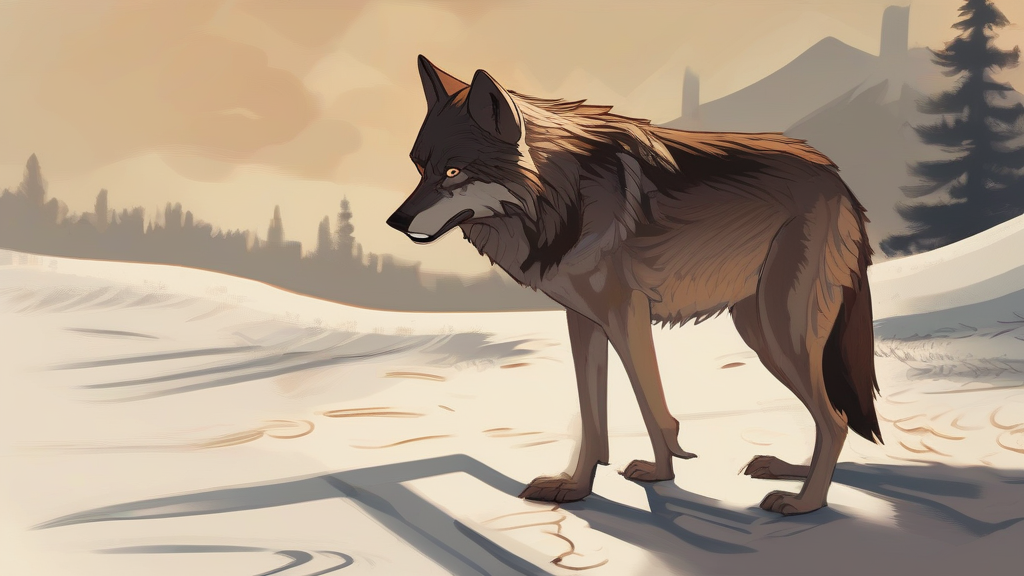
Wolflike is an adjective meaning resembling a wolf. Its literal use describes people, animals, objects, or features whose appearance recalls a wolf: a wolflike stare, coat, silhouette, or movement. Figuratively, it can characterize behavior or personality as wild, independent, predatory, or fearsome, though such uses often carry emotional or literary associations rather than serving as neutral descriptions. The word can also suggest qualities traditionally associated with wolves, including alertness, endurance, remoteness, and an untamed instinct. It is especially useful when an author wants to evoke the image of a wolf without making a direct comparison to the animal. In formal and literary writing, “wolf-like” is often preferred, while the closed form “wolflike” is also standard in dictionaries and appears in journalism, descriptions of animals, and compound modifiers. The expression is understood in both British and American English and can be used attributively or predicatively.
adjectiveResembling a wolf in appearance, behavior, or character. It may describe physical features, a wild or predatory manner, or traits associated with wolves such as independence and ferocity.
- Resembling a wolf visually, as in having wolf-like coloring, facial features, or build.
- Resembling a wolf in behavior or temperament, especially in being wild, independent, predatory, or fearsome.
"The rescued dog watched the wilderness with a distinctly wolflike alertness."
"A pale moon cast wolflike shadows across the snow."
"Her independence was so wolflike that she rarely asked anyone for help."
Wolflike can turn a description into a portrait of wildness, from a distant stare to the untamed edge of someone’s personality.
Reviewed by Deb Chak, Editor. AI-assisted content curated by RJS Tech Solutions LLP.
Etymology of wolflike
Wolflike is an English compound formed from the noun “wolf” and the productive suffix “-like,” meaning “resembling.” “Wolf” descends from Old English wulf and is cognate with German Wolf, Dutch wolf, and Old Norse ulfr, ultimately tracing to a Proto-Indo-European root for the animal. The “-like” element is native to English and is historically associated with Old English līc, meaning form or likeness.
How wolflike is actually used
The term is neutral in register and is commonly written either “wolflike” or “wolf-like,” with the hyphenated form especially frequent in prose. Figurative uses may suggest wildness, ferocity, hunger, or a refusal to be controlled.