
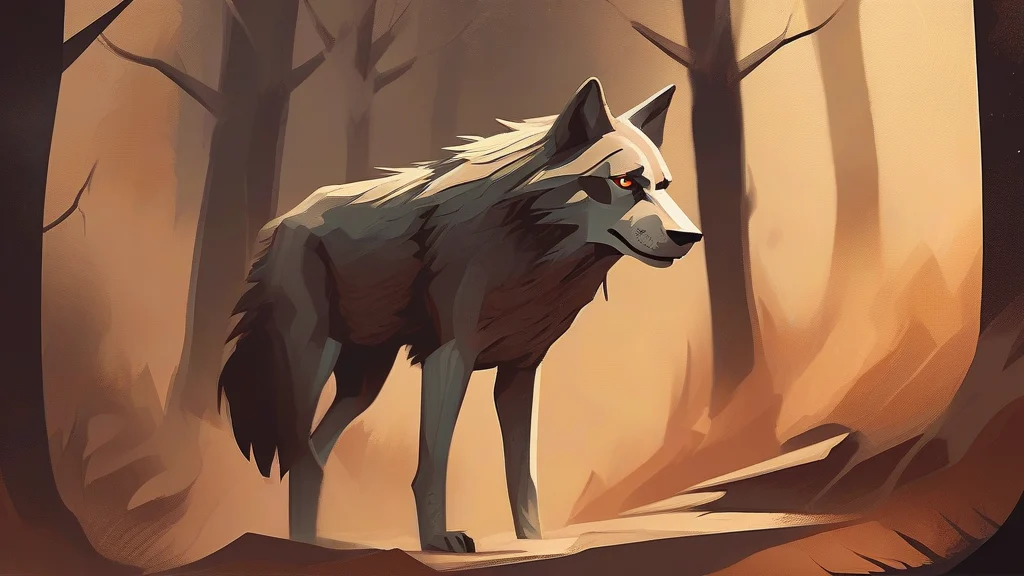
What does wolfish mean?
Wolfish is an adjective meaning resembling a wolf or displaying qualities traditionally associated with wolves, particularly fierceness, hunger, savagery, and a threatening or predatory manner. Its figurative use is especially vivid: a “wolfish grin” suggests cunning or barely concealed desire, while a “wolfish look” can suggest hunger, suspicion, or menace. The word is common in British and American English and appears in both everyday speech and literary description, although it often carries a dramatic or expressive tone. It can refer literally to wolf-like appearance or character, but more often it is used metaphorically for people whose expressions or behaviour seem fierce, greedy, or threatening. Wolfish is especially useful when an author wants to evoke the cultural image of the wolf as a dangerous hunter rather than simply describe someone as fierce or hungry.
adjectiveHaving the appearance, qualities, or behaviour of a wolf, especially seeming fierce, predatory, greedy, or threatening.
- Resembling or characteristic of a wolf.
- Appearing fierce, greedy, savage, or threatening, especially in a figurative or literary context.
"He gave the approaching stranger a wolfish grin and kept his hands firmly in his pockets."
"The hungry children cast wolfish looks toward the kitchen."
"Her wolfish grin made it clear that she intended to claim the last slice."
A wolfish glance turns an ordinary expression into a vivid sign of hunger, suspicion, or barely concealed predatory intent.
Reviewed by Deb Chak, Editor. AI-assisted content curated by RJS Tech Solutions LLP.
Where does wolfish come from?
Wolfish was formed in English by adding the productive suffix “-ish” to the noun “wolf,” which has Germanic roots and is related to words such as German Wolf and Dutch wolf. The suffix can suggest resemblance or a characteristic quality, and in this word it developed the figurative sense of being fierce, predatory, or ravenous. The adjective is related in its root meaning to lupine, a formal word derived through Latin from lupus, meaning “wolf.”
Related word forms
How wolfish is actually used
The adjective is especially common in figurative expressions describing predatory behaviour, greed, suspicion, or a fierce appetite. Its literary and slightly dramatic tone makes it less typical in neutral description than words such as hungry or fierce.