
What does woodcutting mean?
Woodcutting is the art of creating prints by carving an image into a block of wood, usually in relief, and applying ink to the uncut surface so that it can be transferred to paper. It is one of the traditional forms of printmaking and is valued for the bold lines, strong contrasts, and visible marks left by the carving tool. Artists have used woodcutting to reproduce illustrations, create posters, and produce original images, while publishers once relied on woodcut blocks to illustrate books alongside movable type. The term can also mean the general activity of cutting wood or felling trees, though this use is less central in modern English. Although modern tools and printing methods offer greater precision, traditional woodcutting remains important in historical printmaking, education, and the revival of handcrafted graphic art.
nounThe art or technique of making a woodcut by carving an image into a block of wood so that the raised areas can be printed. It can also refer more generally to the activity of cutting wood or felling trees.
- The art or technique of carving an image into a wooden block so that the raised areas can be printed.
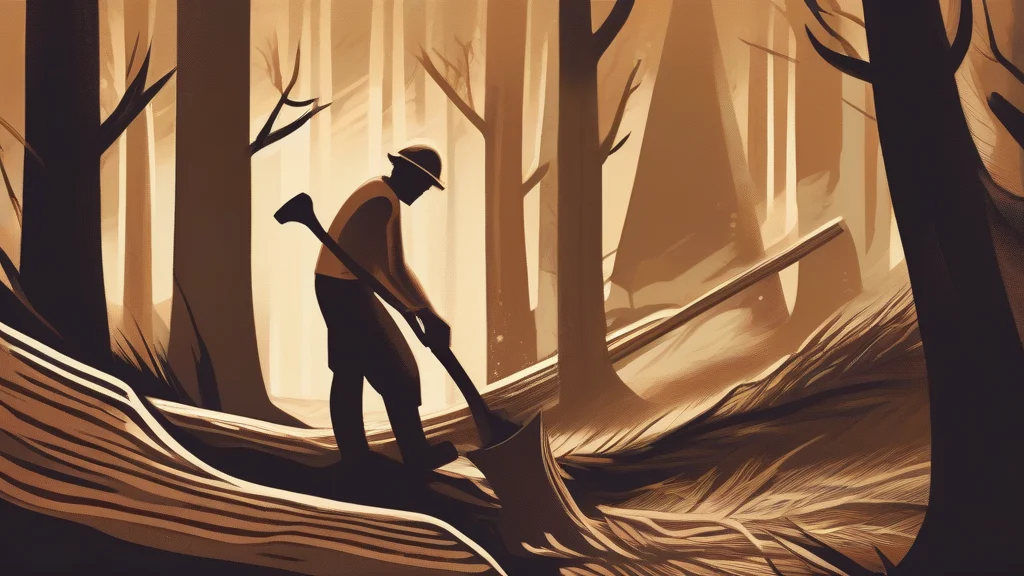
- The activity of cutting wood, especially the felling of trees for timber.
"She took up woodcutting, carving bold patterns into cherry blocks for hand printing."
"She took up woodcutting, carving bold patterns into cherry blocks for hand printing."
"The crew resumed woodcutting after the storm brought down several pines."
The plural is uncommon. In discussions of prints, woodcuts is generally preferred for the resulting objects.
"Several woodcuttings by nineteenth-century artists appear in the catalogue."
Long before photography, a carved woodblock could print an image alongside movable type in the same book.
Reviewed by Deb Chak, Editor. AI-assisted content curated by RJS Tech Solutions LLP.
Etymology of woodcutting
Woodcutting is an English compound formed from wood and cutting, and its principal meaning developed with the use of carved wooden blocks in European printmaking. Woodcut illustrations appeared in printed books from the fifteenth century onward, while wood descends from Old English wudu and is cognate with forms such as Old Norse viðr and Dutch hout. Cut descends from Old English cut and is generally traced to a Proto-Germanic root, although the precise origin of that root is uncertain.
Related word forms
How woodcutting is actually used
The word is most common in printmaking and art history. In forestry and logging contexts, it can overlap with felling, logging, and timber cutting. There is no significant difference between British and American usage.
Easily confused with woodcutting
Woodcutting specifically refers to carving images into wood for printing, whereas woodworking is the broader craft of making objects from wood.
A woodcut is the image or print produced through woodcutting, while woodcutting names the technique or process.