
What does woollyfoot mean?
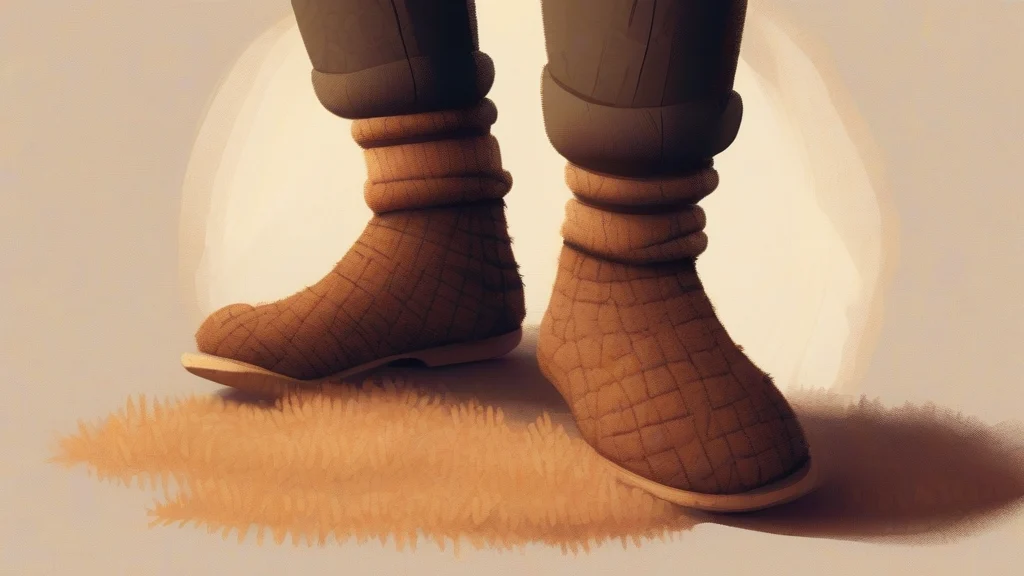
Woollyfoot is a rare English adjective describing something whose feet are covered with wool, wool-like hair, or another soft, fuzzy material. Its imagery is especially suited to animals and imaginary beings: a small woodland creature may be called woollyfoot if shaggy tufts conceal its paws, while an illustrator might give a fantasy sprite the same distinguishing feature. The compound is transparent in meaning, combining woolly, meaning covered or resembling wool, with foot. Although more naturally encountered in the expanded form woolly-footed, woollyfoot is a valid closed compound with the same descriptive force. The word belongs primarily to careful literary or whimsical description rather than everyday conversation. It can be used attributively when naming a woollyfoot creature or predicatively to characterize an animal directly. Its appeal lies in its compactness and vividness: it conveys both the texture of the covering and the part of the body that it obscures without requiring a lengthy explanation.
adjectiveHaving feet that are covered with wool, wool-like hair, or a soft, fuzzy substance.
- Having woolly, furry, or wool-like-covered feet.
"The illustrator described the small forest creature as woollyfoot, its paws hidden beneath shaggy tufts."
"The illustrator described the small forest creature as woollyfoot, its paws hidden beneath shaggy tufts."
"In the naturalist's journal, the young beetle is noted as woollyfoot rather than smooth-footed."
Woollyfoot turns a tiny detail—a creature's fleece-covered feet—into a vivid character-defining label.
Reviewed by Deb Chak, Editor. AI-assisted content curated by RJS Tech Solutions LLP.
Etymology of woollyfoot
Woollyfoot is a modern English compound formed from woolly and foot. Woolly comes from wool, which continues Old English wull, while foot comes directly from Old English fōt. The compound was created descriptively in English rather than inherited as a single word from an earlier language.
Related word forms
How woollyfoot is actually used
Rare and chiefly descriptive, this word has a literary or whimsical tone and is most likely to occur in descriptions of animals, characters, or imagined creatures.
Easily confused with woollyfoot
Woolly-footed is the more transparent and commonly encountered hyphenated form, whereas woollyfoot is the closed compound form.