
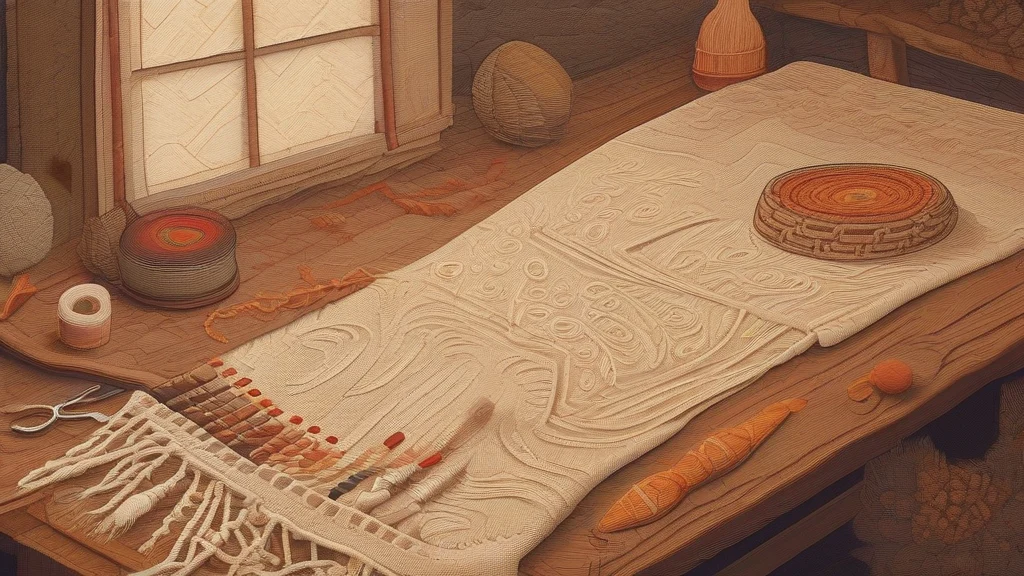
What does woolwork mean?
Woolwork is work made with wool, especially the kind of decorative needlework or embroidery traditionally practiced as a handcraft. The term can refer to an individual piece, such as a sampler, panel, or embroidered cover, as well as to the activity or technique more generally. It is associated with patience, hand skill, and textile traditions, although modern examples may also be produced for practical or decorative purposes. In ordinary use, “woolwork” is less broad than “textile work” and more specific than simply “craftwork,” because the material is part of the definition. When it is used alongside words such as “needlework” or “embroidery,” it emphasizes that wool is the principal material. The word remains understandable in both British and American English, though it may sound traditional or somewhat old-fashioned when compared with more general modern craft terms.
nounWork, especially decorative needlework or embroidery, made or carried out with wool.
- Work executed in wool, especially needlework or embroidery.
"She spent the afternoon restoring a piece of antique woolwork."
"The museum displays an intricate sampler of woolwork from the nineteenth century."
"The craft lesson introduced beginners to basic woolwork and simple embroidered borders."
Woolwork is usually treated as an uncountable noun, so a plural form is uncommon and normally used for separate pieces of work.
"The collection includes several woolworks made by different generations of the family."
In woolwork, the thread carries both the image and the labor of its maker.
Reviewed by Deb Chak, Editor. AI-assisted content curated by RJS Tech Solutions LLP.
Where does woolwork come from?
“Woolwork” is an English compound formed from “wool” and “work.” “Wool” continues Old English wull, inherited from a Germanic word also reflected in forms such as Dutch wol and German Wolle, while “work” continues Old English weorc. The compound developed within English to identify textile work carried out with wool, and later came to be particularly associated with embroidery and other forms of needlework.
How woolwork is actually used
Usually treated as an uncountable noun. The term is most natural when referring to traditional or decorative textile work made with wool, and it can sound more specialized than the general words “needlework” or “embroidery.”