
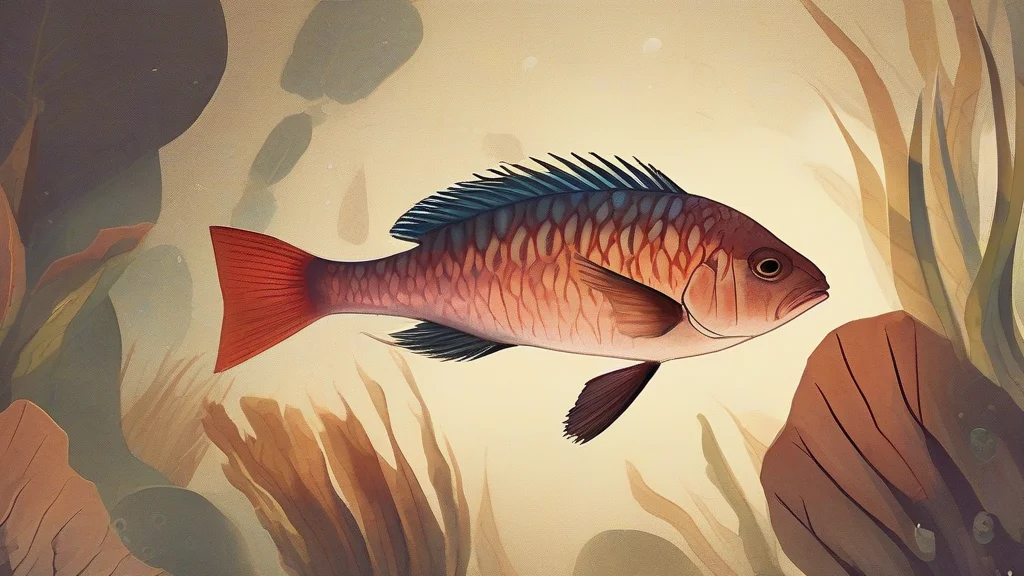
What does wrasse mean?
A wrasse is a marine fish in the family Labridae, a group that includes hundreds of species distributed across temperate and tropical seas. Many wrasses live around rocky reefs, where they feed on crustaceans, mollusks, and other small animals. They are generally recognizable by their elongated bodies, thick lips, and often striking colors, although the family includes both vividly patterned reef fish and more subdued-looking species. The term is used in fishing, wildlife identification, cooking, and aquarium care. In British and American English, it is normally pronounced with a short rounded vowel in British usage and a vowel closer to the vowel in “cat” in American usage. The plural is “wrasses.” Wrasse is particularly interesting because many species can change sex: individuals that begin life as females may later become males, helping regulate the balance of reproduction within a population. The word therefore names not merely a fish but a varied and unusually adaptable family of marine animals.
nounA wrasse is any of numerous marine fishes in the family Labridae, typically found around rocky reefs and coastal waters. Many species have elongated bodies, thick lips, vivid coloration, and diets based on small invertebrates.
- A marine fish belonging to the family Labridae, especially one inhabiting coastal or reef habitats.
"A brightly colored wrasse darted among the branches of the coral reef."
"The diver photographed a vivid wrasse resting beneath an overhang."
"Ballan wrasse are popular catches among anglers in northern European waters."
The standard plural adds “-es”; “wrasse” is unchanged only when it modifies another noun, as in “wrasse fish.”
"Divers observed colorful wrasses swimming around the reef."
Many wrasses can begin life as females and later become males, a remarkable example of sequential hermaphroditism.
Reviewed by Deb Chak, Editor. AI-assisted content curated by RJS Tech Solutions LLP.
Etymology of wrasse
The English word descends from Old English “wræse,” which appeared in Middle English as “wrase” before the modern spelling “wrasse” became established. Cognate forms occur in other Germanic languages, including Old Norse “wrass” and Dutch “wras,” confirming that the word has Germanic ancestry. Its deeper Indo-European derivation is less certain and is not necessary for understanding the modern English form.
Related word forms
How wrasse is actually used
The word is standard in British and American English, appearing chiefly in natural-history, culinary, fishing, and aquarium contexts. It is technical in tone but readily understood.
Easily confused with wrasse
A wrasse is a marine fish, whereas grass is a green plant or the vegetation eaten by livestock.