
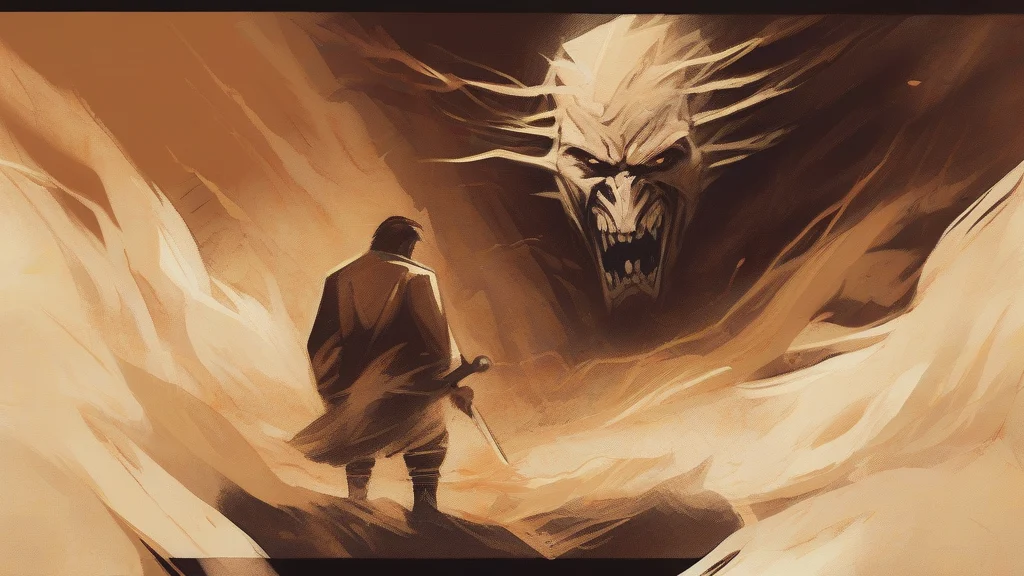
What does wrath mean?
Wrath is a formal and literary word for intense anger, especially anger that is sudden, powerful, difficult to control, or directed toward revenge. Unlike the broad, everyday word anger, wrath often suggests overwhelming or punitive emotion. It can describe a person's fury, but it also has a longstanding religious sense: the wrath of God, or a deity's anger against wrongdoing. Literary and historical works frequently use wrath to characterize rulers, gods, or destructive forces. In modern English, the word has a solemn, dramatic tone and may sound old-fashioned in ordinary conversation, although it remains common in religious language and descriptions of severe anger. Related forms include wrathful, meaning intensely angry, and wrathfully, meaning in an angry or indignant manner. The word is especially memorable because it has long stood for both human rage and the idea of divine or cosmic judgment.
Extreme anger, especially anger that is sudden, uncontrolled, or vengeful; also, punitive anger attributed to a deity or supernatural power.
"The declaration was made in a climate of political wrath."
This is the dominant modern use. It is more dramatic and literary than anger and often implies rage or divine punishment.
Archaic: to be angry, or to make someone angry.
"The nobles wrathed at the king's decision to abandon the campaign."
The verb is now archaic or literary and is uncommon in contemporary English.
The plural is uncommon; writers usually express multiple instances of divine or destructive anger through phrasing rather than pluralizing wrath.
"Ancient accounts describe the wraths of gods and rulers."
Wrath is one of the seven deadly sins, and one of the few English words that has long carried both human rage and divine punishment.
Reviewed by Deb Chak, Editor. AI-assisted content curated by RJS Tech Solutions LLP.
Where does wrath come from?
Wrath descends from Old English forms meaning anger or fury and is related in origin to wreaked vengeance. Its semantic development also connects it with the biblical and religious expression “the wrath of God,” in which divine punishment is understood as the consequence of moral offense. The modern verb use of wrath, meaning to be angry or to make someone angry, is now chiefly archaic.
Related word forms
How wrath is actually used
Wrath is a formal, literary, and often archaic word. It is more dramatic and intense than ordinary anger and frequently appears in religious, historical, or poetic contexts.
Easily confused with wrath
Wrath means intense anger, whereas a wraith is a ghostly apparition or a spectral presence.
Wrath is anger or fury, while wreak means to inflict or carry out, as in wreaking havoc.