
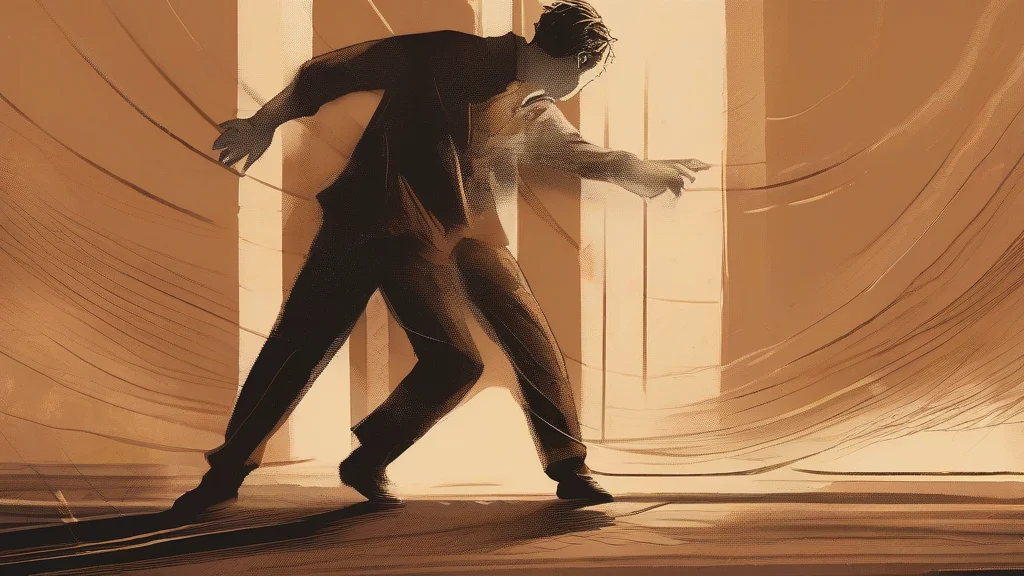
What does wrest mean?
Wrest is chiefly a literary verb meaning to take or obtain something by force, effort, or determination. Its most familiar modern uses are figurative: a person may "wrest control" from another, "wrest concessions" from a reluctant party, or "wrest a living" from an occupation or environment. The word can also describe forcefully pulling, twisting, or wrenching something, although this physical sense is less common in contemporary prose. Wrest has an elevated tone and often conveys determined or forceful action against resistance. It should not be confused with wrestle, which refers to engaging in a struggle or contest. An older sense meaning to struggle or contend is now obsolete. Although wrestling is the more familiar modern activity, wrest remains valuable in formal writing because it gives a concentrated sense of extracting or seizing something that is difficult to obtain.
verbTo take or extract something from someone by force, effort, or determination. In literary use, it can also mean to pull, twist, or wrench something forcefully.
- To take, seize, or extract something from someone by force or determined effort.
- To pull, twist, or wrench something forcefully.
- To struggle or contend; now obsolete.
"She refused to let him wrest control of the conversation."
"She refused to let him wrest control of the conversation."
"By dawn, the rebels had wrest the fortress from its garrison."
Wrest carries the force of a tug-of-war: it survives in modern English chiefly in phrases such as "wrest control from" and "wrest a living from."
Reviewed by Deb Chak, Editor. AI-assisted content curated by RJS Tech Solutions LLP.
Where does wrest come from?
The modern verb continues the Old English wrǣstan, meaning "to twist, wring, or pull," and is inherited through Proto-Germanic. Its development from a general sense of physical twisting to the figurative ideas of forceful taking and extracting occurred over time. Related forms such as writhe and wrist reflect Germanic roots associated with twisting and turning.
Related word forms
How wrest is actually used
Wrest is now most common in formal or literary English, especially in figurative expressions involving control, power, concessions, truth, or a living. Its forceful physical sense is comparatively rare, and the older sense of struggling or contending is obsolete.
Easily confused with wrest
To wrestle is to engage in a struggle or contest, whereas to wrest is to pull, take, or obtain something, especially by force or effort.
Rest means to cease activity or take a break, while wrest means to take or pull something away by force or determined effort.