
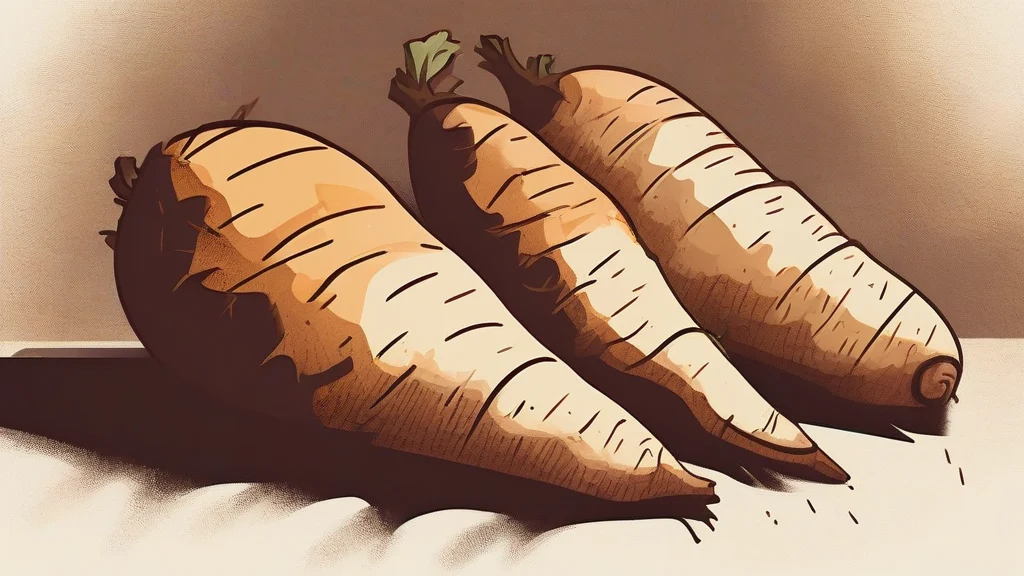
What does yam mean?
A yam is a starchy, edible tuber obtained from various plants in the genus Dioscorea. Yams are important foods in many parts of Africa, Asia, the Caribbean, and the Pacific, where they may be boiled, roasted, fried, mashed, or processed into flour. The word has a significant regional wrinkle: in much of the United States, “yam” is commonly used for sweet potatoes, particularly in dishes such as candied yams or baked yams. Botanically, however, a true yam and a sweet potato are different kinds of plant, with different underground structures. In British and international usage, “yam” more commonly denotes the firmer, starchier Dioscorea tuber. The distinction matters when following botanical, agricultural, or culinary information, especially when identifying varieties, preparation methods, or nutritional differences.
nounA yam is the edible, starchy tuber of various plants in the genus Dioscorea, many of which are cultivated in Africa, Asia, and the Caribbean. In informal US usage, yam also traditionally refers to a sweet potato, although the two vegetables are botanically distinct.
- The edible, starchy tuber of a plant in the genus Dioscorea, including varieties widely cultivated in Africa, Asia, and the Caribbean.
- In informal North American usage, a sweet potato, especially when it is roasted, baked, or candied.
"Roasted yams with herbs and spices make a hearty side dish."
"We simmered the yams until they were soft enough to mash with butter and pepper."
"At Thanksgiving, many families serve candied yams alongside the turkey."
The standard plural is “yams,” used for multiple tubers or plants.
"The market had stacks of yams arranged on wooden shelves."
The word “yam” hides a botanical divide: in much of the United States it means sweet potato, while in British and international usage it more often refers to the starchier tuber of a Dioscorea plant.
Reviewed by Deb Chak, Editor. AI-assisted content curated by RJS Tech Solutions LLP.
Where does yam come from?
The word entered English through Portuguese inhame in the 16th century. Portuguese borrowed the term from a West African source, but the precise origin and linguistic identification of that source remain uncertain. English later shortened or adapted the Portuguese form to yam, which became the established English word for the tropical tuber and, in North American usage, for the sweet potato.
How yam is actually used
In formal botanical and international contexts, yam refers to a Dioscorea tuber. In North American informal usage, it often means sweet potato, a convention that continues despite the vegetables' different botanical identities.
Easily confused with yam
A yam is a tuber from a Dioscorea plant, whereas a sweet potato is the root-like storage organ of Ipomoea batatas, though US English often calls sweet potatoes yams.