
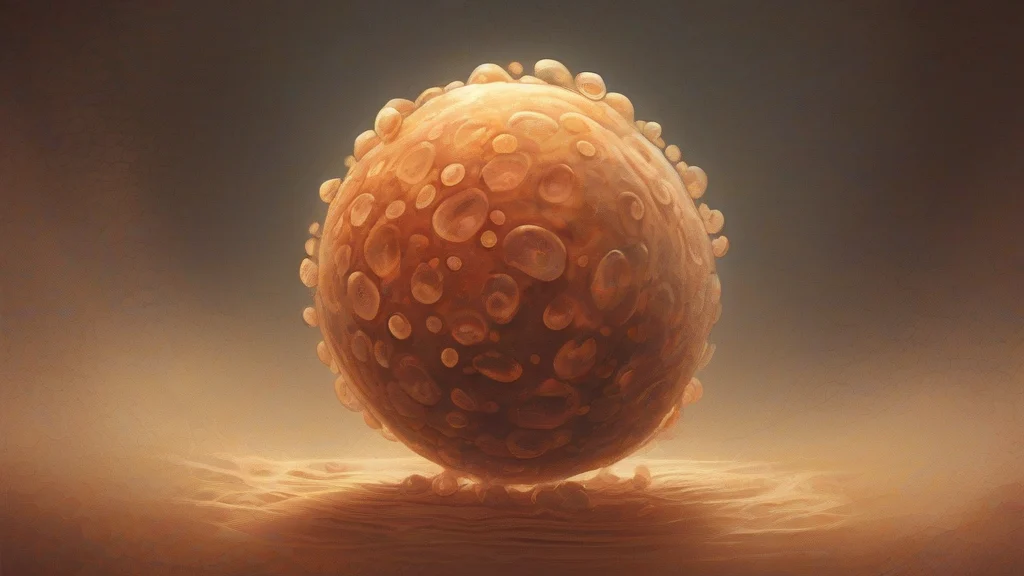
What does zygote mean?
In biology, a zygote is the single cell produced when two gametes fuse during fertilization. In humans, it forms when a sperm cell joins an egg cell in the fallopian tube. The zygote then begins a series of rapid cell divisions, becoming a multicellular embryo while travelling toward the uterus; it may also be described as a fertilized ovum. The term is primarily formal and scientific rather than everyday, and it applies across animals and plants as well as fungi, in which sexual reproduction involves compatible cells fusing. A zygote is not synonymous with an embryo: the former names the initial single-celled stage, while the latter refers to the developing multicellular organism. Zygote is useful because it identifies a precise and important boundary in reproduction, marking the moment when separate reproductive cells become one developing life.
nounThe single cell formed when two gametes fuse during fertilization, before it begins dividing to form a multicellular embryo. It is also known as a fertilized ovum.
- The single cell produced by the fusion of two gametes at fertilization, before the first cell division.
"After fertilization, the zygote begins dividing as it travels through the fallopian tube."
"The zygote divides repeatedly as it develops into an embryo."
"The zygote carries genetic information inherited from both of its parents."
The regular plural is zygotes, pronounced with a final /s/ sound.
"Several zygotes were observed dividing under the microscope."
One cell becomes trillions: every cell in your body descends from the zygote you began as.
Reviewed by Deb Chak, Editor. AI-assisted content curated by RJS Tech Solutions LLP.
Where does zygote come from?
Zygote comes from the Greek zygōtos, meaning “yoked together,” from zygoun, “to yoke,” which is related to zygon, “yoke.” The word entered English in the 19th century as a scientific term for the cell formed by fusion of reproductive cells. Its relatives include zygomatic, zygapophysis, and zygosporangium, all ultimately associated with the same Greek root for a yoke or joining together.
Related word forms
How zygote is actually used
A technical term used primarily in biology, embryology, and genetics. It is uncommon in everyday speech, and the vowel sound in the second syllable differs between standard British and American pronunciation.
Easily confused with zygote
A zygote is the initial single-celled stage after fertilization, whereas an embryo is the developing multicellular organism that follows successive cell divisions.