What does arcadia mean?
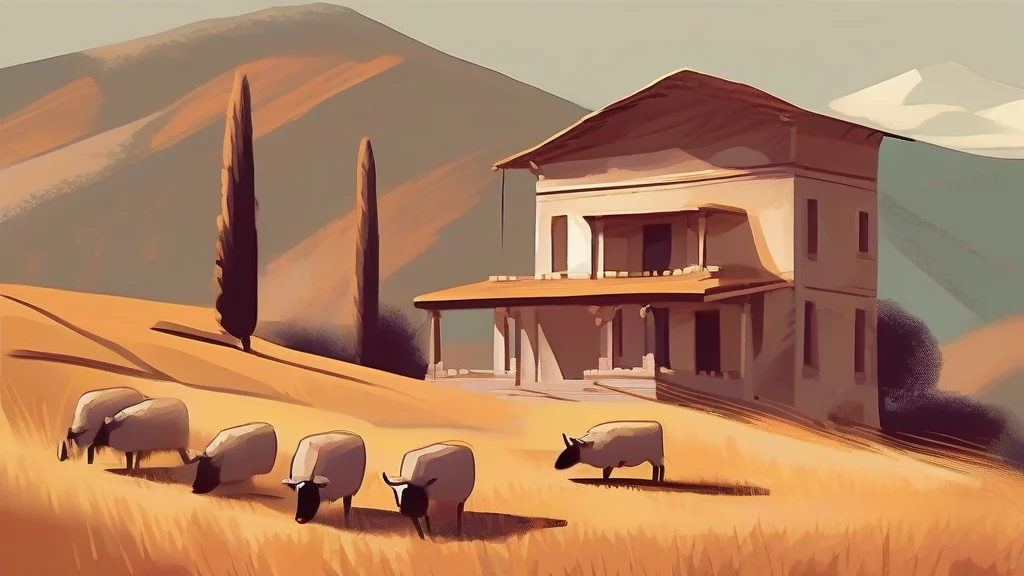
Arcadia is both a real place and one of literature's most enduring ideas. Geographically, it is a mountainous region of the central Peloponnese in Greece, whose isolated uplands led ancient writers to imagine it as the home of shepherds living simply and close to nature. From this grew the literary concept of Arcadia: an idealized landscape of pastoral bliss, populated by carefree shepherd-poets, which became a touchstone for poets from Virgil onward and for painters of the Renaissance and Baroque eras. Today the word is used almost entirely figuratively, denoting any place or era imagined as unspoiled, innocent, and harmonious — whether a countryside estate, a remembered childhood, or a pre-industrial world. Its connotations are nostalgic and gently elegiac, since Arcadian happiness is typically portrayed as fragile and fleeting. The famous motto 'Et in Arcadia ego' captures this poignancy: even in paradise, death is present.
nounA mountainous region of ancient Greece in the central Peloponnese, traditionally regarded as the home of simple shepherds and unspoiled rural life; by extension, any place or state of idyllic, pastoral happiness.
- The actual mountainous region of the central Peloponnese in Greece.
- An idealized vision of rustic, pastoral simplicity and contentment, as celebrated in classical and later European literature and art.
- Any real or imagined place of unspoiled beauty and peaceful happiness.
"In Renaissance painting, shepherds linger in an eternal Arcadia where life moves to gentler rhythms."
"The novel depicts a country estate as a private Arcadia, untouched by industrial modernity."
"Hikers who visit the Peloponnese still walk through the mountains of ancient Arcadia."
Rarely pluralized; the plural appears mainly in literary discussion of multiple distinct visions of the pastoral ideal.
"Each poet constructed his own Arcadias, shaped by the anxieties of his age."
The phrase 'Et in Arcadia ego' — 'Even in Arcadia, I am' — is Death's own signature, reminding us that paradise can never fully escape mortality.
Reviewed by Deb Chak, Editor. AI-assisted content curated by RJS Tech Solutions LLP.
Etymology of arcadia
Arcadia comes from the Greek Arkadia, the name of the Peloponnesian region, traditionally derived from Arkas, a mythological figure whose name relates to the Greek word arktos, meaning bear — the same root that gives us the words arctic and Antarctic, which refer to the northern and southern regions 'under the Bear' constellations. The Latin authors Virgil and Ovid adopted the Greek region as the setting for their pastoral poetry, fixing Arcadia in the European imagination as a land of shepherds and effortless happiness. English writers embraced the ideal from the Renaissance onward, most famously Sir Philip Sidney in his prose romance 'Arcadia' (late 16th century), and the word has served ever since as shorthand for an idyllic, pastoral world.
Related word forms
How arcadia is actually used
Almost always used figuratively today, carrying connotations of nostalgia, innocence, and often a wistful awareness that such innocence cannot last. Common in literary criticism, art history, and environmental writing; capitalized when referring to the Greek region itself, but frequently lowercase when used generically for any idyllic place.
Easily confused with arcadia
Acadia is the historical French colonial region of eastern Canada, whereas Arcadia is the Greek region and its associated pastoral ideal.