
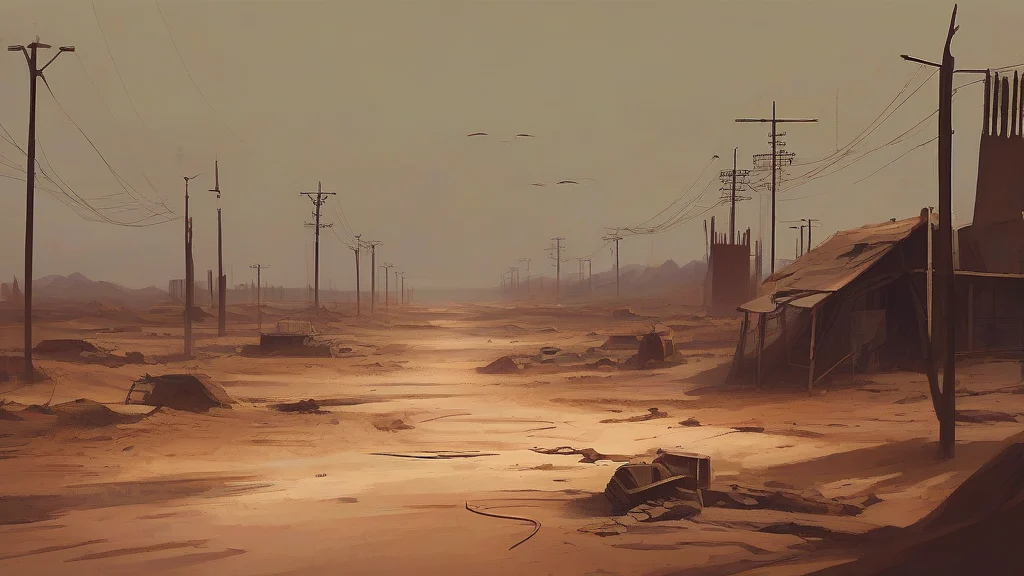
What does wasteland mean?
A wasteland is an uncultivated, barren, or devastated area of land. The term may describe naturally inhospitable terrain, but it is especially associated with places ruined by war, environmental catastrophe, or large-scale abandonment. Figuratively, a wasteland is any neglected, empty, or morally desolate realm, such as a political system, cultural life, or landscape. Its strong negative connotations make it more forceful than a neutral description such as “wilderness.” The word also has literary resonance because T. S. Eliot’s 1922 poem The Waste Land used a barren landscape as an image of modern civilization’s fragmentation and spiritual desolation. Consequently, “wasteland” often conveys not merely physical barrenness but a breakdown of order, community, values, or hope.
nounAn uncultivated or barren tract of land, especially one ruined or rendered desolate. By extension, it means a place or condition characterized by emptiness, neglect, or moral and spiritual desolation.
- An uncultivated, barren, or devastated area of land.
- A figurative place or condition marked by extreme neglect, emptiness, or moral and spiritual decline.
"Years of war had transformed the fertile valley into a bleak wasteland."
"Only a few hardy shrubs survived in the vast wasteland beyond the abandoned town."
"Without meaningful debate, the political process had become a barren wasteland."
The plural is used for separate barren areas or distinct figurative realms, often in political, cultural, or moral contexts.
"The novel portrays several moral wastelands where compassion and responsibility have largely disappeared."
T. S. Eliot’s The Waste Land (1922) turned barren ground into a lasting symbol of modern spiritual desolation.
Reviewed by Deb Chak, Editor. AI-assisted content curated by RJS Tech Solutions LLP.
Where does wasteland come from?
Wasteland is an English compound of waste, meaning barren, desolate, or waste, and land. The compound is recorded from the late Middle English period. Waste came into Middle English from Anglo-French wast, ultimately from Latin vastus, meaning “desolate” or “uncultivated.”
How wasteland is actually used
Literary and often figurative. Literal use may describe naturally barren terrain or land devastated by war, pollution, or nuclear disaster. Figurative use is strongly negative and suggests emptiness, disorder, or the collapse of ethical and cultural values.