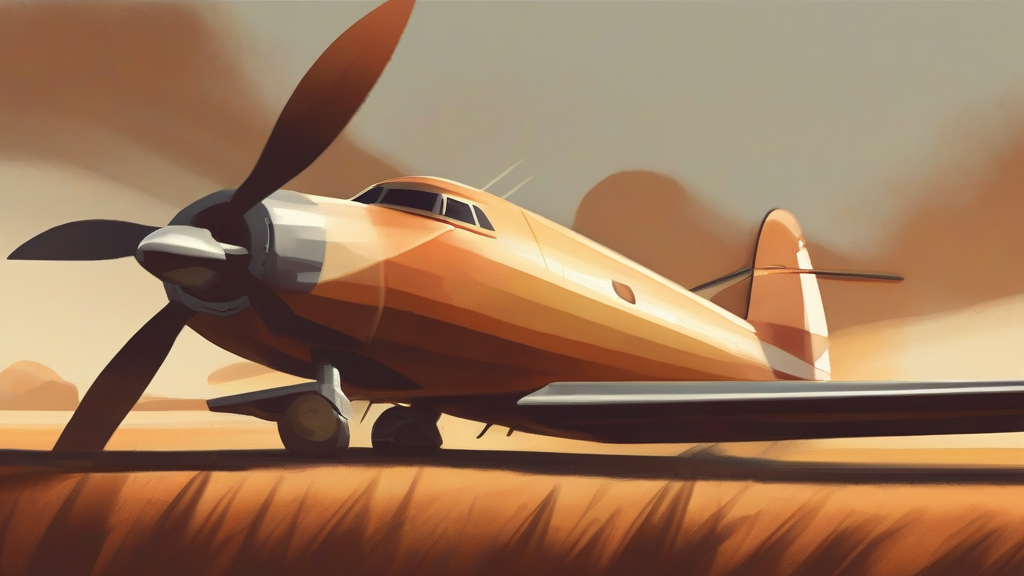
What does aeroplane mean?
An aeroplane is a powered flying machine with fixed wings that generates lift as air moves over those wings, allowing it to travel through the sky under engine power rather than relying on lighter-than-air buoyancy like a balloon. The word is the standard British spelling of what Americans call an airplane, and both terms refer to precisely the same vehicle — only the spelling differs. In everyday conversation people often shorten the word simply to 'plane'. Aeroplanes range from small single-engine propeller craft to enormous passenger jets carrying hundreds of travellers across continents, and they have reshaped commerce, warfare, tourism, and human mobility since the first successful powered flight in 1903. Interestingly, the word itself long predates working aircraft: it circulated in print during the nineteenth century, when flight was still a dream of inventors. Today the term carries no particular emotional charge — it is neutral, practical vocabulary — yet it remains one of the most consequential words of the modern age.
nounA powered flying vehicle with fixed wings and a weight greater than that of the air it displaces, capable of sustained flight through the atmosphere.
- A powered fixed-wing aircraft that flies by generating lift from airflow over its wings.
- (Rare, historical) A surface or structure designed to generate lift, such as an early wing or gliding surface — the original sense before powered flight existed.
"The aeroplane touched down in London just after dawn, ending its eleven-hour crossing."
"She watched the aeroplane climb steadily until it vanished into the clouds."
"The museum's oldest exhibit is a wooden aeroplane built by two brothers in their garden shed."
Regular plural formation; identical in usage to the plural of 'airplane'.
"Dozens of aeroplanes were grounded at Heathrow during the storm."
The word 'aeroplane' was coined decades before any such machine could actually fly — it appeared in print as early as the 1860s, when heavier-than-air flight was still pure fantasy.
Reviewed by Deb Chak, Editor. AI-assisted content curated by RJS Tech Solutions LLP.
Etymology of aeroplane
The word 'aeroplane' derives from French 'aéroplane', which combines Greek-derived 'aero-' (from 'aēr', meaning air) with 'planer', meaning to glide or soar. It entered English in the mid-nineteenth century, well before powered flight was achieved, originally describing lifting surfaces and later applied to flying machines themselves. Its relatives include other aviation terms built on the same Greek root for air, such as 'aerial', 'aerodrome', and 'aeronautics'.
How aeroplane is actually used
'Aeroplane' is the standard spelling in British English and most Commonwealth countries, while 'airplane' dominates American English. Both are fully understood everywhere, but using 'aeroplane' in American writing can read as slightly old-fashioned or deliberately British. The shorter informal term 'plane' is common in everyday speech on both sides of the Atlantic.
Easily confused with aeroplane
Airplane and aeroplane refer to exactly the same vehicle; 'airplane' is the standard American spelling while 'aeroplane' is chiefly British.