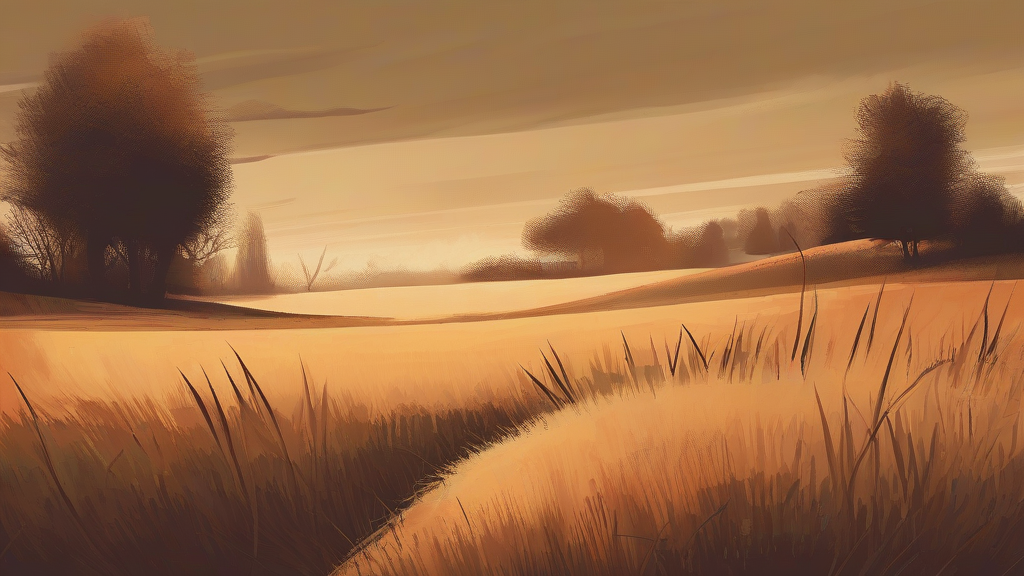
What does aftergrass mean?
Aftergrass is the grass that grows up after a field's first crop of grass has been mown or grazed within the same season. Farmers value this second growth as fresh pasture for livestock in late summer and autumn, or occasionally as a lighter second cut of hay. The word belongs firmly to the vocabulary of agriculture and rural life, appearing most often in British farming contexts, though it is understood elsewhere. It sits alongside a family of related terms—'rowen' in parts of England and America, 'eddish' and 'foggage' in other regional traditions—all describing regrowth after harvest. Historically, aftergrass shares its conceptual roots with 'aftermath', which once meant precisely the same thing before drifting into its modern figurative sense of consequences following an event. For anyone reading old farming accounts, estate records, or rural literature, aftergrass is a small but telling reminder of how closely language once tracked the rhythms of the farming year.
nounGrass that springs up after a first crop of grass has been cut or grazed, especially the second growth in the same season used for later grazing or hay.
- Grass growing after a first cutting or grazing in the same season, used for later grazing or hay.
"The cattle were turned into the meadow to graze on the aftergrass once the hay had been taken off."
"Once the hay was carted, the sheep were moved onto the lush aftergrass."
"A wet August left plenty of aftergrass for autumn grazing."
Rarely pluralized; the singular is standard even when referring to several fields, since the term functions almost collectively.
"The varying quality of the aftergrasses across the valley depended on how early each meadow had been cut."
Before 'aftermath' meant disaster and ruin, it simply meant the grass that grew back after the hay was cut—and 'aftergrass' is that older idea, still alive in farm fields today.
Reviewed by Deb Chak, Editor. AI-assisted content curated by RJS Tech Solutions LLP.
Etymology of aftergrass
Aftergrass combines 'after', from Old English 'æfter', with 'grass', from Old English 'græs', both native Germanic elements rather than borrowings. It arose in English agricultural usage to name the season's second growth of grass, paralleling the older compound 'aftermath' (literally 'after-mowing'), which carried the same meaning before developing its modern figurative sense. Cognate compounds built on 'after'—such as 'afternoon' and 'afterward'—show the same productive Old English pattern of forming temporal or sequential compounds.
How aftergrass is actually used
Chiefly agricultural and rural in register, more common in British farming vocabulary than everyday speech. Related regional terms such as 'rowen', 'eddish', and 'foggage' cover similar ground in different dialects.
Easily confused with aftergrass
Aftermath originally meant the same thing—a second mowing of grass—but has shifted to mean the consequences of an event, whereas aftergrass retains only its literal agricultural sense.