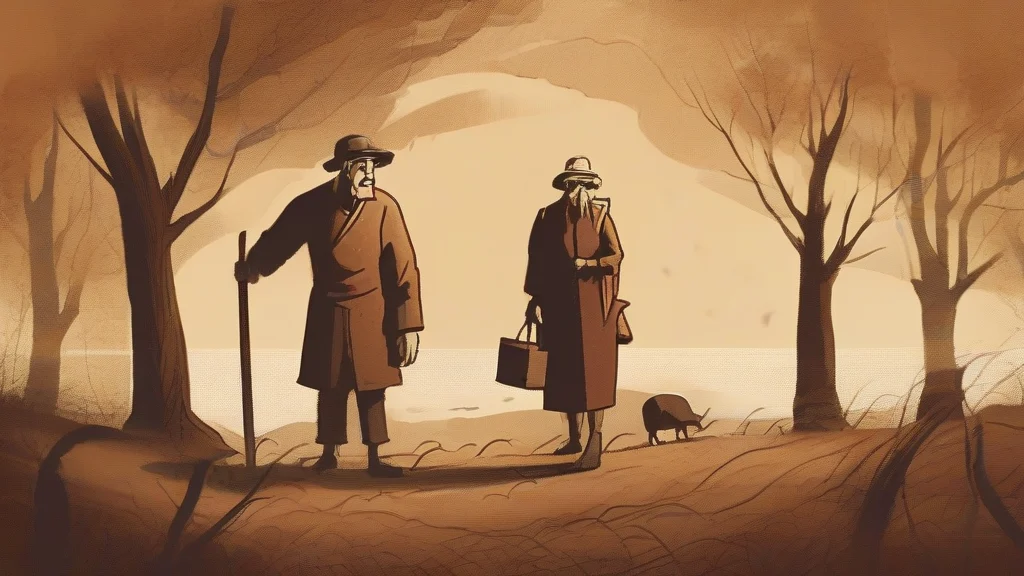
What does aged mean?
Aged is an adjective describing something that has grown old or been deliberately matured over time. In its most familiar use it characterizes elderly people, often with a tone of respect or pathos, as in 'the aged' or 'an aged parent.' It applies equally to products whose quality improves with time — aged cheese, aged wine, aged whiskey, aged wood — where the word signals craftsmanship and patience rather than decline. A third common use states a person's exact age, typically following the noun, as in 'a candidate aged between 25 and 35.' Pronunciation shifts subtly with position: before a noun it usually takes two syllables (/ˈeɪdʒɪd/), while after one it compresses to a single syllable (/eɪdʒd/). Derived ultimately from Latin through Old French, aged belongs to a family of words about time and duration. Its connotations range from dignified venerability to rich, developed flavor, making it a versatile descriptor wherever time leaves its mark.
Old or long-established; having reached an advanced stage of existence or maturity.
"An aged oak tree dominated the corner of the field."
Usually pronounced /ˈeɪdʒɪd/ (two syllables) when placed before the noun.
The past participle of the verb 'age': having become older or been allowed to mature over time.
"The letters had yellowed, aged by decades in the attic."
In this function it is typically pronounced /eɪdʒd/ (one syllable).
Pronounce it carefully: as an adjective before a noun, 'aged' takes two syllables (/ˈeɪdʒɪd/), but after a noun — 'a man aged 50' — it collapses to one.
Reviewed by Deb Chak, Editor. AI-assisted content curated by RJS Tech Solutions LLP.
Etymology of aged
Aged derives from the noun 'age,' which came into Middle English from Old French 'aage' (modern French âge), itself descended from Latin 'aetas,' meaning a period of life or lifetime, rooted in the Indo-European base that also gave us 'aeon.' As the past participle of the verb 'age,' it was adopted as an adjective in Middle English to describe both people advanced in years and things allowed to ripen. Its Latin relatives include 'coeval' (of the same age) and 'medieval' (of the middle age), reflecting the same ancient root of duration and lifetime.
Related word forms
How aged is actually used
When 'aged' precedes the noun it modifies (an aged man, an aged cheese), it is normally pronounced with two syllables, /ˈeɪdʒɪd/; when it follows a noun to give an exact age (a woman aged 30), it is pronounced with one syllable, /eɪdʒd/. The adjective carries respectful connotations when applied to people but can sound slightly formal or old-fashioned compared with 'elderly'.
Easily confused with aged
Aging (or ageing) is the ongoing process of growing old, while aged describes the state of already being old or fully matured.