What does amphibia mean?
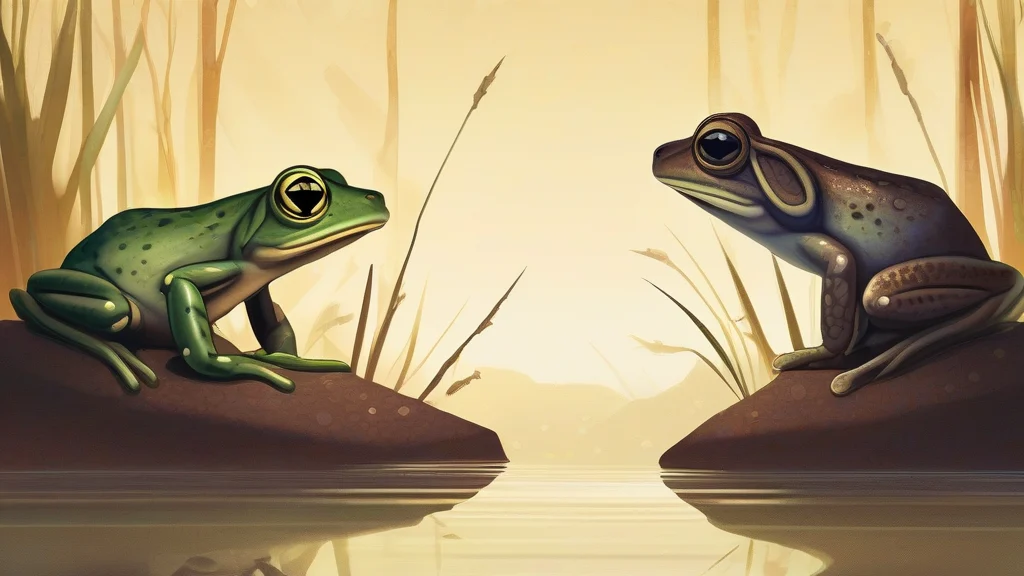
Amphibia is the scientific class name for amphibians, a group of cold-blooded vertebrates that includes frogs and toads, salamanders and newts, and the limbless caecilians. These animals are defined by their remarkable double life: most begin as aquatic larvae, breathing through gills, and transform into adults that live on land or in fresh water, breathing through lungs and through their smooth, permeable skin. Because their skin must stay moist, amphibians are closely tied to wet habitats and are highly sensitive to environmental change, making them important indicators of ecosystem health. In formal contexts — textbooks, museum exhibits, field guides, and taxonomic literature — the word appears capitalized as the class Amphibia, sitting alongside classes such as Mammalia, Aves, and Reptilia. In ordinary conversation, however, people simply say "amphibian." Understanding the distinction between the formal class name and the everyday noun clarifies much scientific writing about these ancient, water-and-land dwellers.
nounAmphibia is the zoological class comprising cold-blooded, mostly four-limbed vertebrates — frogs and toads, salamanders and newts, and caecilians — that typically have aquatic larval stages and breathe partly through their moist skin.
- The biological class Amphibia: the group of vertebrates including frogs, toads, salamanders, newts, and caecilians, characterized by a life cycle that typically involves both aquatic larvae and terrestrial or semi-aquatic adults.
"The pond's shallows teemed with Amphibia during the spring breeding season."
"Modern taxonomy places all frogs, salamanders, and caecilians within the class Amphibia."
"Early naturalists classified Amphibia together with reptiles before recognizing them as distinct groups."
As a taxonomic class name, "Amphibia" functions as a fixed singular entity in formal nomenclature rather than an inflected plural; it is not used as the everyday plural of "amphibian," which is simply "amphibians."
"The exhibit compared specimens from Amphibia and Reptilia side by side."
The word "Amphibia" literally means "living a double life" in Greek — a nod to these creatures' two existences, one in water and one on land.
Reviewed by Deb Chak, Editor. AI-assisted content curated by RJS Tech Solutions LLP.
Etymology of amphibia
The word derives from the Greek "amphibios," meaning "leading a double life" or "living both in water and on land," formed from the prefix "amphi-" ("on both sides") combined with "bios" ("life"). Ancient Greek and Roman writers such as Aristotle used the concept to describe animals capable of living in two elements. The term entered Latin scientific nomenclature in the classical era and was later adopted by Linnaeus and subsequent zoologists as the formal class name Amphibia, though early versions of the class also included reptiles before they were separated out.
How amphibia is actually used
In modern usage, "Amphibia" appears almost exclusively in formal scientific, taxonomic, or educational contexts; everyday speech uses "amphibian" instead. The capitalized form denotes the Linnaean class. Historically the term was applied more loosely, sometimes covering reptiles as well.
Easily confused with amphibia
"Amphibian" is the common noun for an individual animal such as a frog or salamander, while "Amphibia" is the formal scientific name of the entire class that contains all such animals.
Reptilia is the separate class of reptiles — scaly, amniote vertebrates like snakes and lizards — whereas Amphibia comprises scaleless, water-dependent vertebrates with permeable skin.