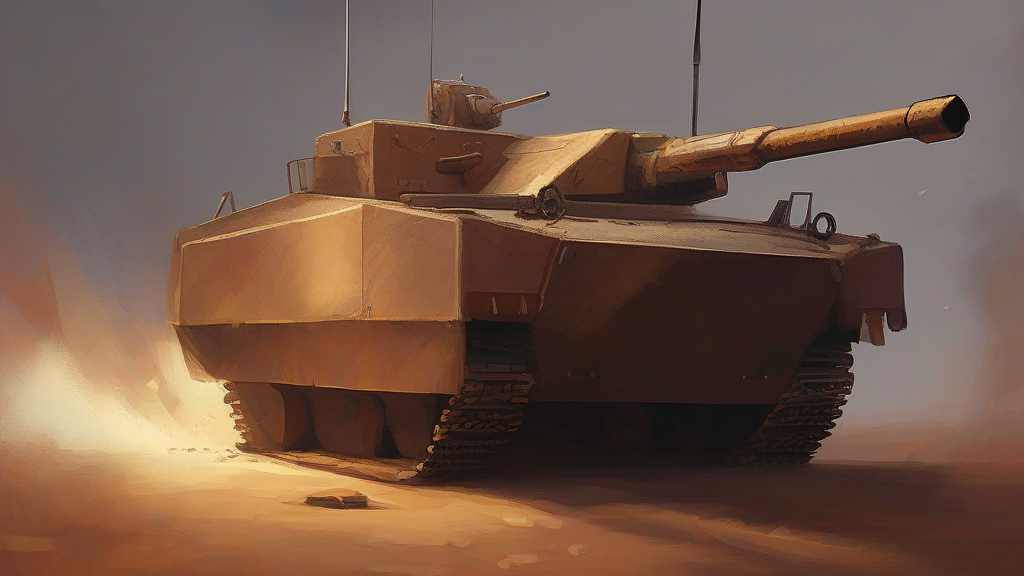
What does antiarmour mean?
Antiarmour is an adjective used almost entirely in military contexts to describe weapons, munitions, and systems designed to defeat armoured vehicles, particularly tanks. An antiarmour missile, for example, is built to penetrate thick steel or composite plating, while an antiarmour round refers to ammunition with the same purpose. The word appears most often in news reporting, defence analysis, and technical literature, where it functions attributively before a noun. In British English it is spelled with a u (antiarmour), while American English drops the u (antiarmor); both forms are usually written as one word or hyphenated. The term carries no emotional connotation of its own — its force lies in precision, instantly signalling that whatever it modifies exists specifically to counter armour on the battlefield. For readers of defence journalism or military history, it is an essential term of art.
adjectiveDesigned for or effective against armoured vehicles, especially tanks and other military armour. The term describes weapons, munitions, and systems whose purpose is to penetrate or destroy armour plating.
- Describing weapons, munitions, or systems designed to defeat or penetrate armoured vehicles.
"The battalion deployed its new antiarmour missiles along the ridge overlooking the valley."
"The army fielded a lightweight antiarmour guided missile that infantry squads could carry on foot."
"Military analysts noted that the country's antiarmour capabilities had improved dramatically over the decade."
Brits spell it 'antiarmour' with a u — but either way, this single hyphenated word describes humanity's entire answer to the tank.
Reviewed by Deb Chak, Editor. AI-assisted content curated by RJS Tech Solutions LLP.
Etymology of antiarmour
The word combines the Greek-derived prefix anti-, meaning 'against', with 'armour', which entered English from Old French armure, itself from Latin armatura ('equipment, arms'), a derivative of arma ('weapons'). Compounds pairing anti- with a military noun became widespread in the twentieth century as modern warfare produced specialized counter-weapons, giving rise to terms like antitank and antiaircraft alongside antiarmour. The Latin root arma also underlies cognates such as armory, armada, and armature.
How antiarmour is actually used
Chiefly used in military and defence contexts. In American English the standard spelling is 'antiarmor' (without the u), while British English uses 'antiarmour'; both are typically written solid or hyphenated rather than as two words. It functions almost exclusively attributively, appearing before nouns such as weapon, missile, round, or system.
Easily confused with antiarmour
Antiaircraft weapons are designed against aircraft, whereas antiarmour weapons target armoured ground vehicles such as tanks.