What does apiculture mean?
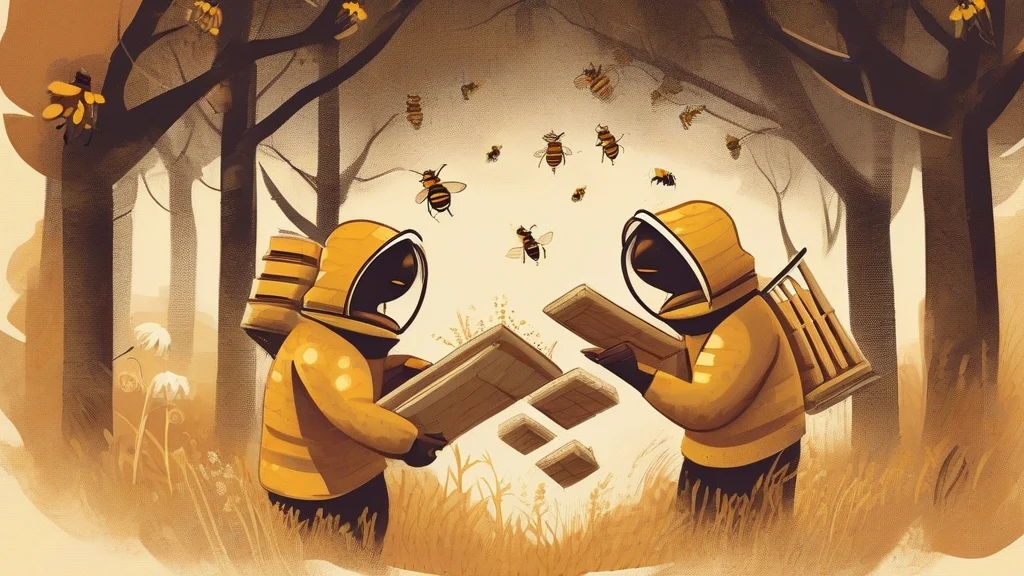
Apiculture is the practice of keeping and managing honeybees, most often in purpose-built hives, to harvest honey, beeswax, propolis, royal jelly, and other hive products — and, increasingly, to provide pollination services for commercial crops. The word derives from the Latin apis, meaning bee, combined with cultura, meaning cultivation, so it literally translates as 'bee cultivation.' While the everyday term is simply beekeeping, apiculture carries a more technical register and appears frequently in agricultural science, government regulation, and environmental discussion. It is practiced at every scale, from a single backyard hive to vast commercial operations that truck colonies across continents to pollinate orchards and fields. Because honeybees play a critical role in global food production, apiculture has become central to conversations about biodiversity, pesticide use, and colony health. A person who keeps bees may be called a beekeeper or, more formally, an apiarist.
nounThe keeping and management of honeybees, especially in hives, for the production of honey, beeswax, and other products or for the pollination of crops.
- The practice of keeping and managing honeybees in hives to produce honey, wax, and other hive products.
- The scientific study of beekeeping as a branch of agriculture.
"After retiring from teaching, she took up apiculture and now tends a dozen hives on her hillside farm."
"Modern apiculture relies on movable-frame hives that allow beekeepers to inspect colonies without destroying them."
"The university's extension program offers a short course in apiculture for smallholder farmers."
Apiculture is treated as an uncountable mass noun; it does not normally take a plural form.
"Apiculture has expanded rapidly across the country over the past decade."
The word comes from the Latin 'apis' (bee) — making an apiarist literally someone who practices 'bee agriculture.'
Reviewed by Deb Chak, Editor. AI-assisted content curated by RJS Tech Solutions LLP.
Etymology of apiculture
Apiculture comes from the Latin apis, meaning 'bee,' joined to cultura, meaning 'cultivation' or 'tending.' The term entered English in the nineteenth century, when beekeeping was being formalized as a scientific agricultural discipline following advances such as the movable-frame hive. It shares its root with apiary (a place where beehives are kept) and with related '-culture' terms such as aviculture (bird-keeping) and sericulture (silkworm raising), all built on the same Latin model of naming the rearing of a useful creature.
Related word forms
How apiculture is actually used
A formal or technical term; 'beekeeping' is the everyday equivalent. 'Apiculture' is common in agricultural, academic, and regulatory contexts. The practitioner is called an 'apiarist' or simply a 'beekeeper.'
Easily confused with apiculture
Aviculture is the keeping and breeding of birds, whereas apiculture is specifically the keeping of honeybees.