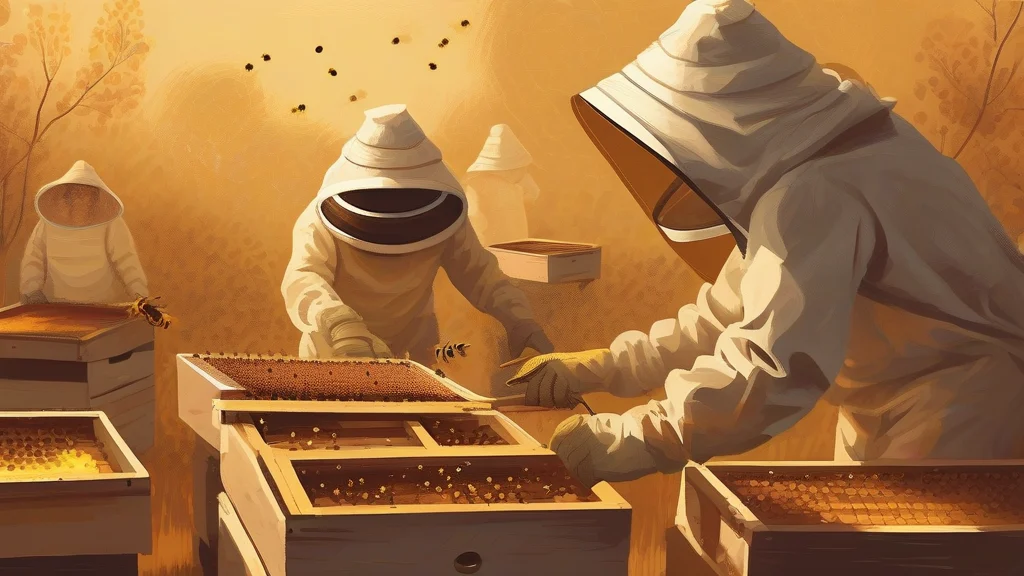
What does beekeeping mean?
Beekeeping is the practice of keeping and managing colonies of honeybees, usually in purpose-built wooden hives, primarily to harvest honey and beeswax and to provide pollination for crops. It ranges from a small backyard hobby — popular with gardeners and urban homesteaders — to a large-scale commercial industry in which migratory hives are trucked across regions to pollinate fruit and nut orchards. A practitioner is called a beekeeper, while the scientific term for the activity is apiculture. Beekeeping carries broadly positive connotations, associated with patience, environmental stewardship, and self-sufficiency, though it demands real knowledge of bee biology, seasonal care, and protection against pests such as varroa mites. The word itself combines "bee" with "keeping," reflecting its essence: sustained, attentive care of living creatures rather than simple ownership. As public interest in pollinators has grown, beekeeping has become both a practical pursuit and a symbol of ecological awareness.
nounThe practice or occupation of keeping and caring for colonies of honeybees, typically in hives, especially for the production of honey, beeswax, and crop pollination.
- The practice or occupation of maintaining honeybee colonies in hives for honey, beeswax, pollination services, or other products.
"After retiring, she took up beekeeping and now harvests honey from six hives at the edge of her orchard."
"Beekeeping has surged in popularity among city dwellers, with rooftop hives appearing on restaurants and office buildings."
"He studied beekeeping under an experienced apiculturist before installing his first hive in the spring."
Rarely used; "beekeeping" is almost always treated as an uncountable noun, with no natural plural.
"Traditional beekeepings vary widely between regions, from skeps in Europe to log hives elsewhere."
Humans have been raiding and then tending beehives for thousands of years — a scene of honey gathering painted in a Spanish cave some 8,000 years ago is often cited as the earliest depiction of our relationship with bees.
Reviewed by Deb Chak, Editor. AI-assisted content curated by RJS Tech Solutions LLP.
Etymology of beekeeping
Beekeeping is formed from "bee," from Old English bēo (of Germanic origin), combined with "keep" in its sense of tending or caring for animals, from Old English cēpan. The practice itself predates the word's modern form: honey-gathering from wild colonies is depicted in prehistoric rock art, and managed hive-keeping developed across the ancient Mediterranean and Near East. The learned synonym "apiculture" derives from Latin apis ("bee") plus cultura, entering English in the nineteenth century as beekeeping became a formalized branch of agriculture.
Related word forms
How beekeeping is actually used
A neutral, everyday word used by both hobbyists and professionals. The more technical term is "apiculture" (from Latin apis, "bee"), common in agricultural and scientific contexts; "beekeeper" denotes the person practicing it. In American English the word is uncountable when referring to the activity generally.
Easily confused with beekeeping
Birdwatching is the observation of birds in their natural habitat, whereas beekeeping involves actively managing captive bee colonies in hives.